Preventive Heart Screenings
Screenings provide your provider with insights and a baseline on your health condition. These tests are a first crucial step in establishing a health plan.
Screenings provide your provider with insights and a baseline on your health condition. These tests are a first crucial step in establishing a health plan.
As you work toward a healthier lifestyle to either prevent future problems or to address a current condition, keep in mind some reasons why screenings are worth your time:
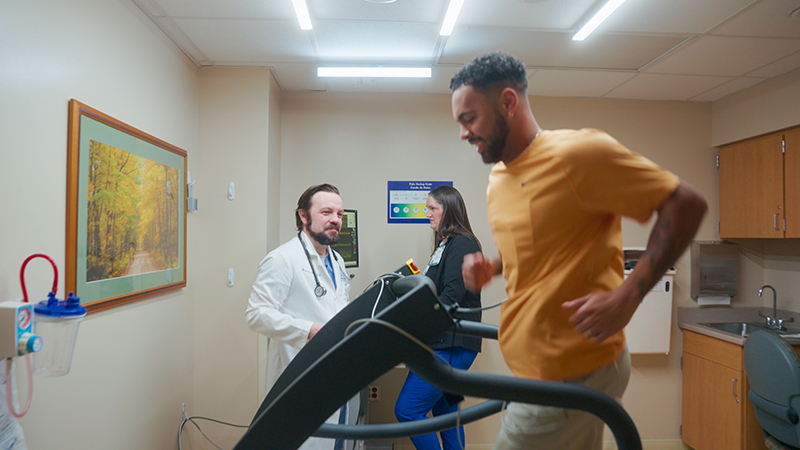
Patients are considered at risk for heart attack, stroke or other cardiovascular problems if they have a history of:
Powered by articles from Mayo Clinic, our Health Library is your resource for educational information on Symptoms, Conditions & Diseases, and also Tests & Procedures. Try any search you like or start with these popular searches.
Suggested keywords: Abdominal ultrasound for aortic aneurysm, Ankle-brachial index, Bronchoscopy, Carotid ultrasound, Coronary angiogram, Holter monitor, Nuclear stress test
Start the screening process by talking to your primary care provider about your symptoms. They can order the screening that is right for you. Once you receive an order from your provider (required to make an appointment), you are able to self-schedule these two common screenings:
To set up an EKG, answer a few questions, pick you date and fill in your patient information. Appointments are available at locations across the Beacon Health System.
To set up a Cardiac CT or PET scan, answer a few questions, pick you date and fill in your patient information. Appointments are available at locations across the Beacon Health System.
Your age, gender, lifestyle and medical history play a role in your heart health. You may benefit from a heart scan if you:
A heart scan is not for everyone. It is not recommended for routine screening of people who do not have symptoms of heart disease and have a low risk of heart attacks. Heart disease risk factors include hypertension, high cholesterol, diabetes, obesity, tobacco use, family history of heart disease. We recommend you work with your doctor on your overall health plan and any risk factors you have.
A heart scan is an X-ray used to identify and measure calcium-containing plaque in your arteries. Too much plaque can narrow your arteries and restrict blood flow. Doctors may use a heart scan to detect your risk of heart disease or heart attack. Calcium buildup in your arteries can be caused by diet, high blood pressure, high cholesterol, diabetes and other pre-existing medical conditions.
If you are experiencing chest pain, especially in combination with jaw or arm pain, lightheadedness, nausea, vomiting or difficulty breathing, you might be having a heart attack. Call 911 or go to the nearest emergency room right away.
Once you have results, our team can identify the correct provider to help you move toward a healthier you.
We know cost is important to you. You can use our Price Estimator Tool to determine what you can expect to pay for a screening and how much insurance may cover.
When you need more advanced heart care, we have experienced cardiovascular specialists close to home. We provide the latest in heart care testing, cardiology treatments and procedures.