Heat, dehydration and stomach illness: What families should watch for during camping season

Sara Golden, NP, MedPoint Urgent Care Goshen
Summer activities often mean long days outside, shared meals and changes in routine whether kids are at day camp, overnight camp or families are spending time camping together.
While these experiences are a highlight of the season, they can also increase the risk of heat-related illness, dehydration and stomach issues.
“During the summer, we often see a combination of these concerns rather than just one,” said Sara Golden, NP, family medicine nurse practitioner at MedPoint Urgent Care Goshen. “Heat, hydration and gastrointestinal symptoms are all closely connected.”
Heat exhaustion is one of the more common issues providers see during warmer months. It can develop gradually, especially during long periods of activity in the sun.
Early symptoms often include fatigue, dizziness, headache and nausea. Kids, in particular, may not recognize these signs or may ignore them to keep participating in activities.
“By the time a child says they don’t feel well, they may already be fairly dehydrated,” Sara said.
Hydration plays a central role not only in preventing heat illness, but also in helping the body recover from it.
When fluids aren’t replaced regularly, especially in hot weather, dehydration can develop quickly. This risk increases even more if a child or adult is also experiencing vomiting or diarrhea.
Stomach-related illnesses are another common concern during camping season. Changes in food storage, shared eating spaces and limited handwashing access can all contribute.
“Even small lapses in food safety can lead to symptoms like nausea, vomiting or diarrhea,” Sara said. “You’re losing fluids from both directions. That’s when dehydration can become more serious more quickly.”
When those symptoms occur alongside heat exposure, it can create a cycle that’s harder to manage.
Early signs of dehydration can include dry mouth, fatigue, decreased urination and irritability. In younger children, symptoms may be harder to recognize, which is why close observation is important.
Prevention often comes down to a few consistent habits.
Staying ahead of hydration by drinking water regularly, not just when thirsty, can make a significant difference. Electrolyte replacement can also be helpful, particularly for kids who are active for long periods.
Taking breaks in the shade, wearing lightweight clothing and building rest into the day can help reduce the risk of heat-related illness.
Food safety is another key piece.
Keeping perishable foods properly stored, washing hands before eating and being mindful of how long food is left out in warm temperatures can help prevent stomach issues before they start.
Even with preparation, though, symptoms can still develop.
Mild cases of heat exhaustion or stomach illness can often be managed with rest, fluids and close monitoring. But there are times when medical care is the right next step.
“If symptoms aren’t improving, or if someone is unable to keep fluids down, that’s when we want to evaluate them,” Sara said.
Urgent care can help assess dehydration, manage symptoms and provide treatment to help patients recover more comfortably.
In more serious situations with symptoms such as confusion, fainting or signs of heat stroke, emergency care is necessary right away.
For most families, these issues are preventable with a little planning and awareness.
“Paying attention early and staying ahead of hydration is one of the best things you can do,” Sara said. “It allows families to enjoy their time outdoors without interruption.”
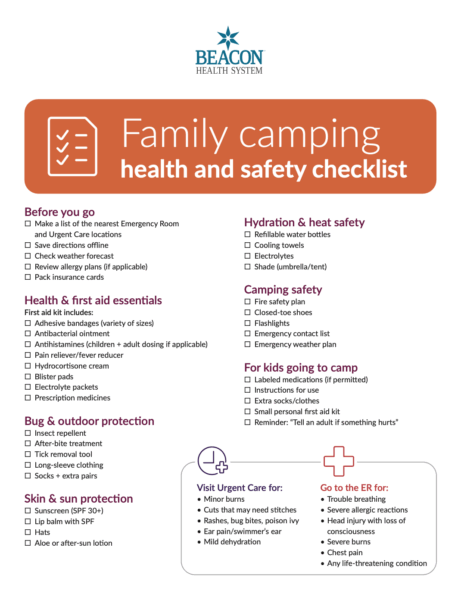 Free download!
Before heading to camp or out on a family trip, most of us pack the basics: clothes, snacks, gear. But one of the most important things to bring is something you hope you won’t need: a well-stocked first-aid kit. Get your free family camping health and safety checklist.