Beacon collaborates with Notre Dame researcher to improve maternal health outcomes

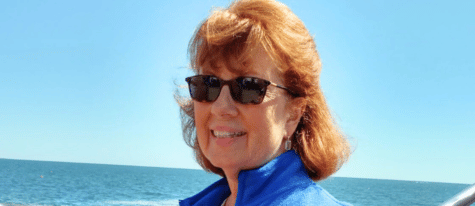
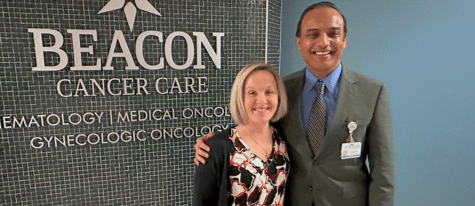
Dr. Joyce Adams speaks with Kimberly Green Reeves at the Pop Up Village. (Photo by Matt Cashore/University of Notre Dame)
New mothers often put their own health needs aside as they focus entirely on caring for their newborn and adjusting to their expanding family. They often feel overwhelmed and may not advocate for themselves.
That’s why Beacon Health System has partnered with University of Notre Dame researcher Joyce Adams to implement an innovative postpartum care program proven to save mothers’ lives. The Focused Postpartum Care model provides new mothers with regular follow-up visits, education on warning signs of complications, and peer support groups for up to a year after delivery.
Beacon and Adams have worked together over the past four years on several initiatives, including hypertension management and Pop Up Pregnancy & Family Village, which provides comprehensive health services and community resources for expectant and new mothers in one location. Our collaboration is featured in Notre Dame’s “What Would You Fight For” series in the story, “Fighting for maternal health.”
“This collaboration represents something deeply personal for our community and for Beacon. It’s about protecting the most vulnerable among us during one of life’s most precious and precarious moments,” said Kimberly Green Reeves, Beacon’s Vice President of Community Impact & Partnerships, who was interviewed for the story.
Green Reeves explained how Beacon has been focused on this goal for the past several years because of a stark reality: Infant and maternal mortality is a crisis in our country, and Black and African American mothers face disproportionate risks.

Dr. Joyce Adams at a postpartum care session at Beacon Health System. (Photo by Matt Cashore/University of Notre Dame)
“Right here in St. Joseph County, infant mortality rates tell us our community’s health is at stake, and we can’t have healthy babies without healthy mothers,” she said.”The value of partnership here, particularly with Dr. Adams, is just invaluable to better health care outcomes. I’m grateful that we can collaborate.”
Adams’s program was originally developed and tested in Ghana, where it showed remarkable results. Nearly all participating mothers better understood danger signs and were willing to seek help for complications. After its success in Ghana, Adams brought the model to Indiana to address similar challenges facing American mothers.
“What makes this partnership with Dr. Adams so extraordinary is that we’re bringing world-class research expertise to bear on our local reality. We’re not waiting for solutions to trickle down — we’re actively creating them, right here, right now,” Green Reeves said.
“These mothers deserve a system that reaches them where they are, that wraps around them with support, and that refuses to accept that any mother should be lost to a preventable tragedy. This isn’t just research for us — it’s a commitment to our neighbors, our families and the future of our community.”