Recognizing and managing anxiety in kids
We all have worries from time to time — even children. But sometimes our children’s worries linger, or we notice aspects of their behavior that just seem “off,” and this can be signals that a child is experiencing anxiety.
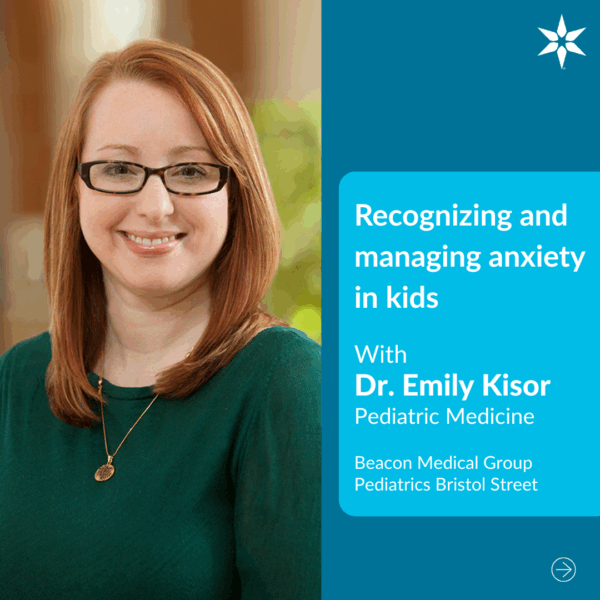 We spoke to pediatrician Emily Kisor, MD, of Beacon Medical Group Pediatrics Bristol Street to learn more about how anxiety shows up in children and how we can help them.
How do I recognize anxiety in my child?
“I have learned that anxiety in children can actually look a lot different than it does in adults,” says Dr. Kisor. For this reason, it can sometimes go undetected for a long time or be confused for something else.
One way for anxiety to reveal itself in children is through physical symptoms. “They can complain of headaches. They can complain of stomach aches,” explains Dr. Kisor. The child may have trouble falling asleep or wake up frequently at night having bad dreams.
“You may notice that they’re avoiding things that they used to like,” she says. That can be going to school, soccer practice, choir practice or similar activities.
Anger or sadness can also indicate anxiety in kids. Dr. Kisor has talked with parents who believe their child is angry at the world. “But then when we dig into it, it’s really that they’re terrified, maybe about school or about relationships with friends,” she says. “We can’t just take it at face value with kids. We have to dig in and ask them the questions.”
When should I talk with my child’s healthcare provider?
If you feel like your child’s mood is affecting day-to-day life or family dynamics, talk to your child’s healthcare provider.
“If you notice that it’s disrupting your schedule, if you’re tiptoeing around this child or you’re avoiding conflict as much as possible, that’s definitely a time to talk to a provider,” she adds.
Also seek out help if you feel the problem has been going on for many weeks without improvement, or if you’ve tried to help but feel your child is still struggling.
How can a healthcare provider help?
“There are lots of different things we can do to help,” says Dr. Kisor. She wants to reassure parents that help doesn’t necessarily mean medications. “That is never my goal, to jump to medicine. There are age-appropriate coping tools that can be taught.”
Even children as young as four years old can do deep breathing, learn helpful yoga poses and participate in centering exercises. She says there are many good books for kids of all ages that share coping mechanisms, such as naming to tame fears and anxiety.
“Of course, we have some amazing therapists that can help and give age-appropriate coping techniques,” Dr. Kisor adds.
Medication can sometimes be a good tool if used with these other techniques. “Under the guidance of a provider it can be helpful, and a lot of times it’s not meant to be a long-term solution,” she says.
What if I’m not sure what to do?
“We don’t want to wait too long until [the child] is spiraling and it’s much, much more difficult to come out,” advises Dr. Kisor. “If you have any concerns about your child’s mental health, or the way they’re acting just seems a little bit out of sync with how they usually are, we trust you as parents to know your children.”
She explains that providers rely on parents to share the child’s history and what adults are observing about the child’s behavior and mood. The provider can listen, assist parents in sifting through the information and help make a plan for moving forward.
“So, reach out and speak to your medical provider if you have any questions. We’re always here to listen and to help,” says Dr. Kisor.
Find care for your family
Learn more about primary care providers at Beacon and schedule online.