Confidence and trust in Beacon carried patient through breast cancer journey
 Being diagnosed with cancer will scare anyone. But because Kathy Wolfe and her husband had experienced Beacon’s quality of care before, she walked into treatment with someone many patient’s don’t always have right away: confident in her care team.
Something was off
Kathy, an artist and retired legal secretary now in her 70s, first knew something was off when she noticed an odd tension between her left arm and her breast. It didn’t go away, and her husband encouraged her to talk to her gynecologist.
From there, things moved quickly.
She spoke to her gynecologist in March 2025, had her mammogram and ultrasound imaging at the Elkhart General Breast Care Center, followed by a breast biopsy.
Kathy waited a long week for the biopsy results to come back; they confirmed that she had breast cancer. “I’m fortunate it wasn’t real aggressive,” she said.
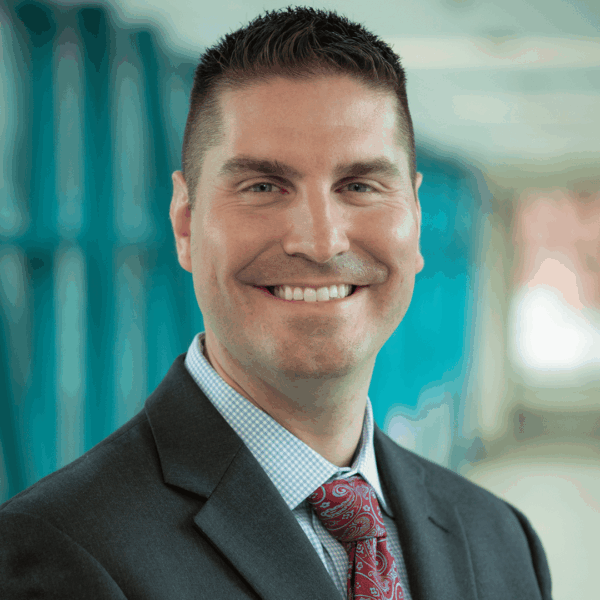
Dr. Justin Koenig
A united care team
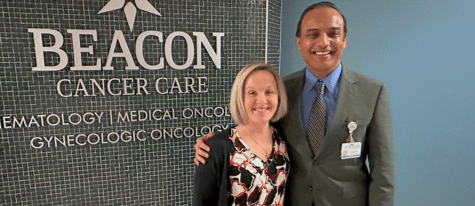
She was soon meeting with surgeon Dr. Justin Koenig, Beacon Medical Group Surgical Services Elkhart, and Dr. Hafiz Muhammad Aslam, hematology oncology, Beacon Medical Group Oncology Elkhart.
“Dr. Koenig put my mind at ease, which is what you really need at that point,” Kathy said. “Dr. Aslam was very kind and gave me all of the options. He told me exactly what needed to be done.”
The trust didn’t come from nowhere.
Kathy had a heart procedure at Beacon several years ago, and her husband was treated at Beacon Cancer Care Elkhart General. “I only go to Beacon. Everything I’ve had to go through has been done there,” she said. “I think they’re amazing there. I put a lot of faith in them.”
That faith was met with options.
“I explained to Kathy that while mastectomy is an option for breast cancer, her tumor was also one that could be treated with breast-conserving therapy, with a partial mastectomy followed by radiation,” Dr. Koenig said.
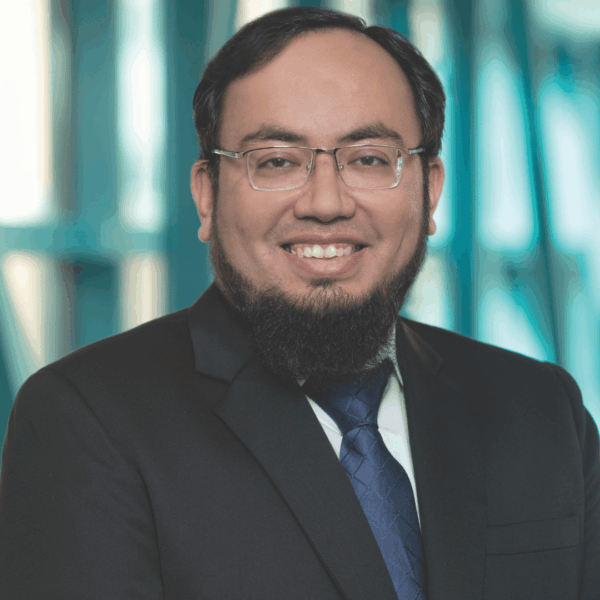
Dr. Hafiz Muhammad Aslam
They discussed both options, as well as the similar survival benefits, and made the decision together to proceed with breast-conserving therapy. Dr. Koenig removed the tumor during a same-day surgery in early April.
“When her pathology results came back with a favorable outcome and negative margins, I was able to deliver the good news to Kathy personally, which is always a real joy for me as a surgeon,” Dr. Koenig said.
Kathy found the four weeks of radiation treatments that followed to be easier than expected.
“I was really amazed at how easy they were,” she said.
It was a sentiment her husband could relate to.
He had radiation treatments for his own cancer battle a few years earlier. “He was amazed at how wonderful the people there in the radiation department were,” Kathy said.
Her experience was no different. “The girls there in the radiation department are wonderful. They’re friendly and very open. I really appreciated them a lot,” she said.
Preventing cancer from coming back
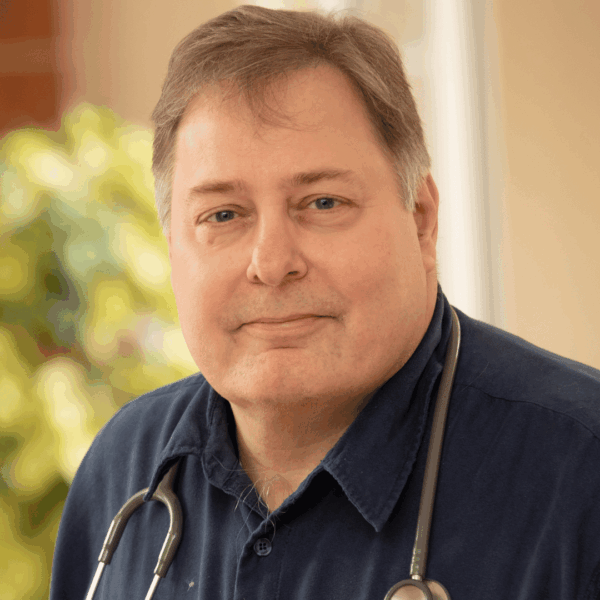
Dr. Russell Johnson
Radiation oncologist Dr. Russell Johnson, Beacon Medical Group Oncology Elkhart, said that post-operative radiation therapy is typically recommended for patients who have breast-conserving surgery for early-stage breast cancer.
“The theory and practice of this is that it will kill any remaining cancer cells in the breast tissue and significantly reduce the risk of local recurrence,” Dr. Johnson said. “This [risk] reduction is typically around 75%, meaning, for example, if the risk of local relapse is 20%, the addition of radiation therapy will decrease the risk of relapse to 5% or less.”
Radiation therapy for breast cancer used to last five-and-a-half weeks, but Kathy was a candidate for a newer, shorter regimen: whole breast radiation over three weeks, followed by an additional three to five days of radiation directed just to the site where the tumor was removed.
“We are also looking at even more brief courses of radiation for breast cancer,” Dr. Russell said.
Additionally, Dr. Aslam discussed hormone therapy with Kathy, explaining that her breast tumor was estrogen-sensitive, meaning it depends on estrogen for growth.
“To reduce the risk of recurrence, improve survival, and help control potential metastatic disease, I recommended anti-estrogen therapy,” he said, noting how this would continue for five years. “She will continue follow-up visits annually with mammography, and her bone health will be monitored with a bone density examination every two years.”
Kathy feels fortunate to have this level of care available locally.
“It’s so very comforting to have this quality of care so close to home,” she said. “I really came away from the situation feeling like the people at Beacon really, really care about you. And that just means so much.
And today, she remains cancer-free.
“I am feeling great. I really am.”