World-class care at Beacon Kalamazoo helped patient with brain bleed return to life he loved
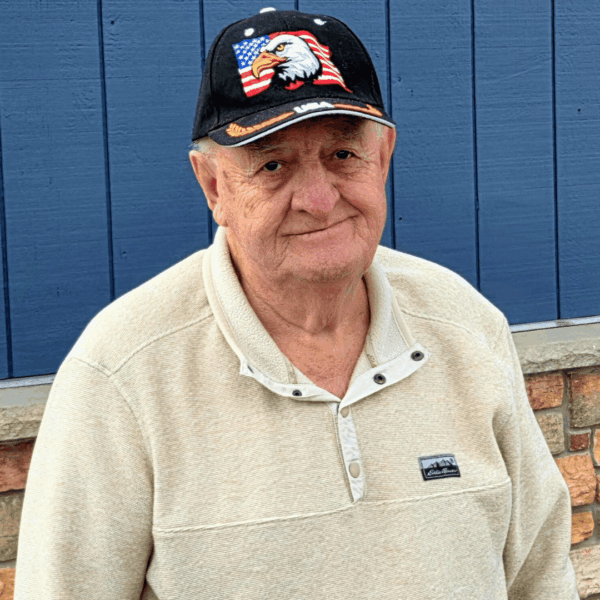
Robert Eifler of Battle Creek
Robert Eifler and his wife, Edie, used to keep a simple, satisfying routine. They tended their yard, shared meals, and stayed active—small habits that made their days feel full. Family visits, neighborhood chats and Robert’s steady rhythm of home projects all added up to a life they loved.
Then, on an ordinary October afternoon, everything changed.
While weed whacking one afternoon in the yard at their Battle Creek home, Robert, 85, lost his footing and fell backward. A neighbor helped him up, and he insisted he was fine. No head pain, no soreness, nothing that felt like an emergency. He went back inside. Life moved on.
But over the next several weeks, quiet signs stacked up. Edie, who had worked in orthopedics, ICU, and the emergency room, noticed Robert’s memory slipping.
Then came more alarming changes. His left hand fumbled. Food slid off a paper plate onto his lap. The newspaper slipped from his grasp. He struggled with simple routines and complained of pain above his right eye.
When Edie checked his blood pressure, it read 225 over 120. She had seen enough. That was the moment she decided there was no time to wait.
At a nearby community hospital, tests brought the first answers. A CT scan showed two subdural hematomas—pockets of blood collecting between the brain and its outer covering. He had also experienced a small stroke, and imaging showed restricted veins at the back of his neck.
Overnight, the local team worked to bring his blood pressure down. His echocardiogram the next morning was normal. When it became clear he would need specialized neurological care, the care team arranged for him to be transferred to Kalamazoo.
Edie didn’t hesitate. Given a choice of where Robert would go, she chose Beacon Kalamazoo without hesitation. When a bed opened late that Friday, the transfer was arranged. Robert traveled straight to his room so his care could continue without delay.
At Beacon Kalamazoo’s Brain and Spine Institute, neurologists and specialists reviewed his scans and symptoms. The team consulted Dr. Michael Adix of Beacon Kalamazoo Neurosurgery, a neurointerventional surgeon known for minimally invasive brain procedures. He explained Robert’s condition in clear, simple terms.
The bleeding under the surface of Robert’s brain was increasing pressure and fueling the small strokes. The safest and most precise next step was middle meningeal artery (MMA) embolization, which is a minimally invasive method that could stop the bleeding from the inside.
“This approach lets us stop the bleeding at its source without opening the skull, which can mean faster recovery and fewer complications for the right patients,” Dr. Adix said.
What Robert was facing
A subdural hematoma is a collection of blood that forms between the brain and the thin, protective layer that covers it. Even a seemingly minor fall can cause tiny veins to tear and leak slowly. Over time, that blood can build up, pressing on the brain and causing symptoms like weakness, confusion, headaches or trouble with everyday tasks. In other words, exactly what had been unfolding in Robert’s life for weeks.
MMA embolization treats the problem from the inside: through a small incision in the groin, a thin tube is guided through the blood vessels to the middle meningeal artery, which helps feed the area where the bleeding membranes form.
There are three primary ways to block this artery: tiny particles, thin metal coils or specialized glue. In Robert’s case, Dr. Adix used metal coils, a method that safely shuts down the blood supply that keeps the hematoma going, allowing the body to reabsorb the blood more naturally over time. For the right patients, it’s a precise alternative to open brain surgery.
Robert’s procedure was scheduled for Sunday at 8 a.m. As planned, it lasted three hours. Through that tiny groin incision, Dr. Adix navigated the catheter under X‑ray guidance, reached the target artery, and placed the embolic material.
The result was exactly what they had hoped for. Stopping the bleeding meant stopping the mini strokes.
Recovery began in the ICU, where the pace slowed, but the level of care didn’t. Registered nurse Suzanne, with 25 years of experience, provided one-on-one care and steady reassurance. She answered questions, anticipated needs and brought warmth to a ‑highstakes‑ moment.
Edie felt seen and supported, too. The team arranged a restful stay for her at the Hospital Hospitality House, and a chaplain and priest personally escorted her there. After a good night’s sleep, she returned to Robert ready for the next steps.
Her memories of those days focus on the people at Robert’s bedside and behind the scenes. “I’ve never seen such expertise paired with genuine kindness,” she said. “They treated us like they’d known us forever, and that made all the difference.”
Robert’s strength returned quickly. Faster than expected, even.
Just a couple of days after the procedure, he was well enough to go home. Back in Battle Creek, he eased into his routine, and before long, he was even shoveling snow.
The Beacon Kalamazoo team helped reduce the stress of follow-up by combining appointments into one day, minimizing time on the road. In January, a CT scan and a neurointerventional surgery followup‑ confirmed steady progress. Dr. Adix reviewed the results and outlined the path forward.
Looking back, Edie is certain their decision shaped everything that followed. She had recognized the warning signs, insisted on getting help and had chosen Beacon Kalamazoo for the next level of care.
“If you want the best care, you go to Beacon,” she said. “They were skilled, they were thorough and they never forgot we were people, not just a case.”
What began with an unremarkable fall became a reminder of how quickly life can change and how the right care can make all the difference. At Beacon Kalamazoo, Robert and Edie found decisive action and an expert, compassionate team. They found something else, too – a way back to the life they loved together.