Water safety for kids: What parents should know before heading to the pool, lake or river
Start with safety before kids get in the water
From backyard pools to summer lake trips, water is a big part of family fun during the summer. But it also comes with serious risks.

Dr. Sarah O’Connor, Beacon Medical Group Pediatrics Bristol Street
“Drowning is the leading cause of death for children under age 4 and one of the top causes of accidental death for kids ages 5 to 18,” says Dr. Sarah O’Connor, pediatrician at Beacon Medical Group Pediatrics Bristol Street. “Drowning can happen quickly and quietly. It often doesn’t look the way people expect, which is why prevention and supervision are so important.”
A few simple safety steps can help protect children and prevent accidents.
Assign a “water watcher”
Close, constant supervision is the best way to prevent water injuries.
“I always recommend choosing a ‘water watcher,’” says Dr. O’Connor. “That person’s only job is to watch the kids — no phones, no distractions and no alcohol. If toddlers or weak swimmers are in the water, an adult should be in the water and should stay within arm’s reach.”
Drowning is often silent, so active supervision is critical. Switching Water Watchers every 15 to 30 minutes can help adults stay alert and focused.
Know the risks in different water settings
Every type of water has different dangers.
“Backyard pools are risky for young children and weak swimmers who may wander into the water without supervision. Making sure pools are surrounded by fences and have locked gates is an important way to ensure safety. Removing ladders from above-ground pools when they are not in use is another way to prevent young kids from getting into the water without parents knowing.”
Children should also be taught never to dive into shallow water and to never swim alone.
Lakes can have cloudy water, sudden drop-offs and hidden objects under the surface. Rivers can be even more dangerous because of strong currents.
“Currents in rivers can be stronger than they look,” Dr. O’Connor explains. “Even shallow water can be unsafe for young children. At Lake Michigan, strong rip currents can pull swimmers away from shore. Always pay attention to beach warning flags and never underestimate the water.”
Use life jackets in open water
Life jackets are vital when children are near lakes and rivers.
“Children should wear a properly fitted U.S. Coast Guard-approved life jacket when they are in or near open water,” says Dr. O’Connor. “Inflatable toys and water wings are not a substitute for real safety equipment.”
Pick bright swimsuit colors
Swimsuit color can make a big difference in water safety.
“Bright colors like neon orange, pink and yellow are easier to see in the water,” Dr. O’Connor says. “Blue, green and white swimsuits can blend into the water, especially in lakes or darker pools.”
If you cannot quickly spot your child in the water, it may be time to choose a brighter swimsuit.
Teach water safety habits early
Teaching good habits early can help children stay safer around water. Swim lessons are important. “Learning to swim is a life-saving skill,” says Dr. O’Connor.
“Teach kids never to swim alone and always ask an adult before going near the water,” Dr. O’Connor adds. “Older children should also help by locking pool gates after swimming.”
Know what drowning really looks like
Many people think drowning is loud and easy to notice, but that is often not true.
“In reality, drowning is usually quiet,” Dr. O’Connor explains. “A child who is struggling may not splash or call for help.”
Warning signs may include:
- Head low in the water
- Gasping for air
- Trying to roll onto their back
- Struggling to move forward while swimming
“If something does not look right, trust your instincts and act quickly,” she says.
Be ready for emergencies
Even with safety precautions, emergencies can happen.
“Learning CPR and keeping a phone nearby can save valuable time during an emergency,” says Dr. O’Connor. “When visiting a lake or park, make sure you know your exact location so emergency responders can find you quickly.”
Make water safety part of every outing
A safe day around water starts with planning, supervision and awareness.
“Water safety works best when you use multiple layers of protection,” Dr. O’Connor says. “Supervision, safety equipment and good habits all work together to help keep kids safe.”
Before your next trip to the pool, lake or river, take a few minutes to review your family’s water safety plan.
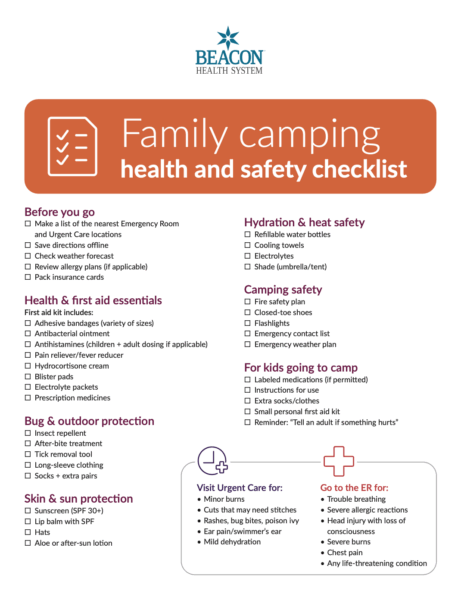 Free download!
Before heading to camp or out on a family trip, most of us pack the basics: clothes, snacks, gear. But one of the most important things to bring is something you hope you won’t need: a well-stocked first-aid kit. Get your free family camping health and safety checklist.