When every second matters: The teamwork that saved a young woman’s life
Rachel Brading saw it coming.
It was nighttime and a car was speeding toward them, blowing through a blinking red light on a quiet rural road. In an instant, she knew it wasn’t going to stop.
She and her sister, Emma, were sitting in the backseat when instinct took over.
Rachel reached across the seat and pulled Emma toward her, trying to move her out of harm’s way. In doing so, she placed herself directly in the path of the collision.
The impact was violent. The vehicle struck their car broadside, sending it spinning into a telephone pole and then into a ditch. The sisters’ heads slammed together.

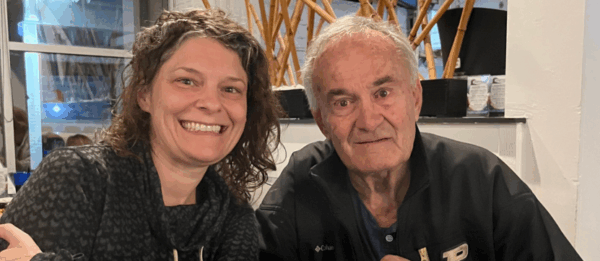
(L-R) Rachel Brading with her sister Emma at the wedding reception.
Just moments earlier, the family had been leaving a fall wedding reception in southwest Michigan, making the drive north toward Kalamazoo to stay with relatives. Their trip from Cape Coral, Florida, was meant to be a weekend of celebration.
Instead, in a matter of seconds, everything changed.
The race against time begins
The family found themselves on unfamiliar roads with no cell service, disoriented and unsure where they were or how quickly help might arrive. By what her family later described as nothing short of a miracle, a police officer happened to be patrolling nearby and immediately called for emergency responders.
Given the severity of her injuries, Rachel was taken by ambulance to Memorial Hospital in South Bend. The officer drove Wayne to South Bend so he could be there for her. Meanwhile, Michelle and Emma were taken by ambulance to a nearby hospital for evaluation; Emma was later transferred to Grand Rapids for additional trauma care.
Well before the ambulance transporting Rachel reached the hospital, Memorial’s Level II trauma team was activated.
“As soon as she was en route, they called us all in,” said Beacon Medical Group neurosurgeon Dr. Neal Patel.
He was among the many doctors, nurses and specialists from multiple disciplines who arrived in the ER to help Rachel, knowing this would be a race against time.
“There were a whole bunch of people gathered in the middle of the night who moved heaven and earth,” Dr. Patel said.
Massive injuries and no margin for error
When Rachel arrived, the seriousness of her condition became clear almost immediately. She had suffered multiple injuries, each of which could have been fatal on its own.
One of the most dangerous was a tear in her pulmonary artery, the major blood vessel that carries blood from the heart to the lungs. The injury caused severe internal bleeding into her chest.
“Bleeding into your chest with a pulmonary artery injury is a massive injury,” Dr. Patel said. “It’s potentially fatal.”
At the same time, Rachel had sustained a severe brain injury, along with multiple fractures to her skull and face, a pelvic fracture and significant damage to her lungs. Her body was struggling to maintain basic functions.
At several points, her condition was so unstable that the care team could not be certain she would survive long enough to reach surgery.
“There was a time when we didn’t even know if she was stable enough to go to the operating room,” Dr. Patel said. “We were actively giving her blood to keep her blood pressure up.”
Making a life-saving plan
With seconds and minutes carrying enormous weight, a multidisciplinary team gathered at Rachel’s bedside. The group included trauma surgeon Dr. Mark Thompson, cardiothoracic surgeon Dr. Walter Halloran, critical care medicine physician Dr. Matt Koscielski and Dr. Patel.
Together, they assessed all of Rachel’s injuries and faced a critical question: Which threat to her life had to be addressed first?
They determined that the immediate danger was the uncontrolled bleeding in her chest. If that was not stopped, Rachel would not survive long enough for any other treatment to matter. The plan was bold and carefully staged, and it was her only chance.
Three critical surgeries, one chance to save Rachel
Rachel was rushed to the operating room.
First, Dr. Halloran performed an emergency procedure to open Rachel’s chest and locate the torn pulmonary artery. The goal was simple but urgent: Stop the bleeding and stabilize her long enough to move forward.
Once the bleeding was controlled, there was no break and no delay.
“In that same operating room, we flipped her over and did a craniotomy,” Dr. Patel said.
During the procedure, he temporarily removed a section of Rachel’s skull to give her swelling brain the space it needed to safely expand. The surgery relieved dangerous pressure that could have caused further injury and allowed her brain a chance to begin healing.
Performing two major surgeries back‑to‑back on a critically unstable patient carried enormous risk, but the team knew there was no other option.
Dr. Patel later reflected that perhaps only two other hospitals in Indiana would have both the resources, skilled teams and the willingness to attempt such a complex sequence.
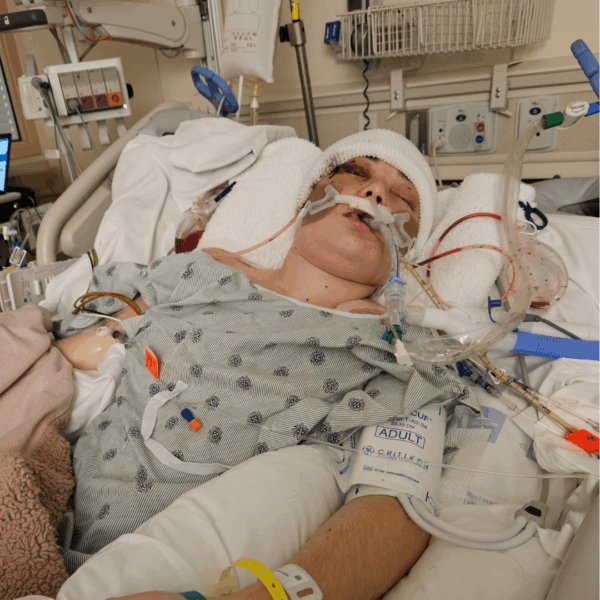
Rachel in the Intensive Care Unit at Memorial Hospital
A short time after the first surgeries were complete, the care team informed the family that Rachel’s neurological checks had worsened. Imaging was done and the outlook felt grim. There were moments when her survival itself was in question.
Rachel had developed delayed bleeding on the opposite side of her brain — something Dr. Patel likened to bruising that evolves after a traumatic impact. He performed a second emergency craniotomy on her.
The longest days and nights
By the time Michelle joined Wayne at Memorial after being treated for her own injuries, Rachel’s initial surgeries were already complete. Rachel was now in the ICU, completely immobilized, on a ventilator and fighting for her life. Rachel’s husband, Alex, who had not accompanied the family to Michigan for the wedding, rushed to Memorial as soon as possible and stayed faithfully by her side.
Rachel entered a long and fragile phase of recovery in the ICU. Nearly every system in her body required constant monitoring and support.
“There are a lot of things that have to be closely monitored and maximized — blood pressure, blood work, electrolytes, nutrition, oxygenation,” Dr. Patel said. “Everyone needed to work together every day, focused on her and her family.”
Slowly, something shifted. Rachel stabilized. Her imaging results remained steady. Against odds that once felt overwhelming, she remained alive.
The hands that helped
In the midst of that fear, moments of compassion stood out. Michelle remembers the kindness and help they received from staff early on, calling their day nurse Amy Hurley, RN, “amazing,” and the kind, comforting presence of critical care and pulmonary disease physician Dr. Luke White. They also were thankful for the guidance of case manager Katelynn Jessie, who helped the family secure a room at the Ronald McDonald House across the street from the hospital.
The turning point
Over the following weeks, Rachel underwent additional complex procedures, including removal of the ventilator and placement of a tracheostomy, a feeding tube in her abdomen to provide nutrition during her recovery and a lumbar drain to help relieve pressure while her brain healed.
Once the swelling subsided, Dr. Patel performed a cranioplasty to replace the portions of Rachel’s skull that had been removed to protect her brain during the most critical phase of her injury.
Those bone flaps had been carefully preserved, monitored and stored so they could be safely returned, an intricate process that requires coordination, expertise and precision. It is the kind of advanced trauma care often associated with large academic centers, made possible here through Memorial’s multidisciplinary teamwork.
After her skull was reconstructed, Rachel woke up. Michelle said she went from being nonresponsive to sitting up by herself, moving more and trying to talk.
“The brain is happiest when it lives inside a closed skull,” Dr. Patel said. “When you close up that box, you restore natural cerebral blood flow. You’re almost resetting the brain’s thermostat back to normal.”
From the uncertainty of those early ICU days, Rachel began what Dr. Patel described as a remarkable neurological recovery, crediting both her youth and the unwavering commitment of the care team.
“No one gave up because we knew she was young and healthy,” Dr. Patel said.
Rachel believes her survival cannot be separated from her faith.
“God gave all the doctors and nurses a lot of energy and wisdom and strength to take care of me,” she said.
She and her family often reflect not only on what Rachel endured, but on what didn’t happen: no major infections, no pneumonia and none of the complications so often associated with prolonged ICU stays.
But Rachel was not the only one fighting to recover.
A second path to healing
Emma was also seriously injured in the collision. She sustained a large hematoma and a deep laceration on the top left side of her head, along with a small brain bleed. She also suffered a femur fracture and a serious foot injury. In the days following the crash, Emma underwent a total of four surgeries to address her injuries.
Once Emma was stabilized, she was transferred from Grand Rapids to Memorial Hospital so she could remain close to her family as Rachel fought for her life. For a brief time, the sisters stayed just two rooms apart in the ICU, allowing their family to be near both as they recovered. Emma was later moved to the Ortho Neuro Patient Care Center to continue her recovery.
Michelle recalls the compassion shown by Emma’s orthopedic surgery team, guiding the family through a complicated recovery with clarity and care. She also spoke with deep gratitude about nurse Kieran Moseng, RN.
“She was an angel — she was so comforting,” Michelle said.
Michelle later learned that Kieran is Dr. White’s sister, a connection that only deepened her sense of reassurance during an otherwise overwhelming time.
Then, after nearly seven weeks of acute trauma care at Memorial, Rachel transitioned to inpatient rehabilitation at Shirley Ryan AbilityLab in Chicago the day after Thanksgiving.
The quiet, diligent work of healing
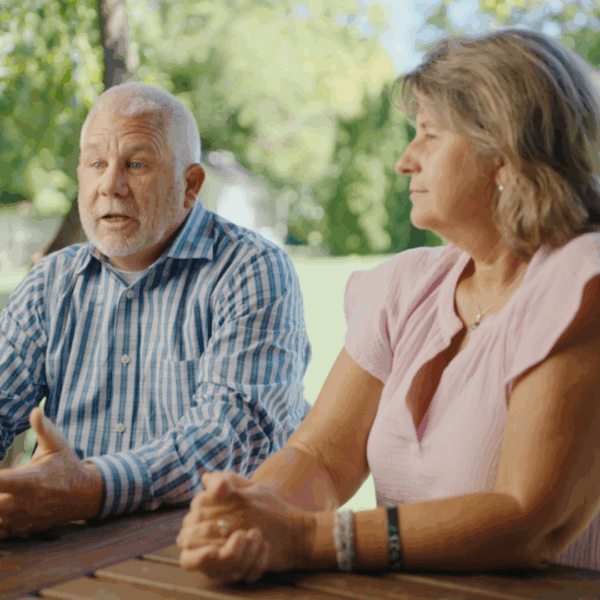
Rachel’s parents, Wayne and Michelle Schwartz
Michelle described the days of Rachel’s rehabilitation as long and demanding, but they brought moments of hope. Each morning, as the family passed through the hotel lobby, they were met by a small wooden sign that read: Today is a new day.
As the weeks passed, Michelle realized that surviving the crisis was only the beginning. The deeper challenge was learning how to live with uncertainty without being consumed by it.
She began thinking about the biblical story of manna — daily provision given with no guarantees beyond the present day. That image became the foundation for how the family learned to endure Rachel’s recovery.
Some days, manna came in the form of a small neurological improvement. Other days, a movement Rachel hadn’t made before. And some days, the only manna was the fact that Rachel was still there breathing, fighting, continuing.
A full‑circle moment
In the fall of 2025, about a year after the car crash, Rachel, Emma and Michelle returned to Memorial Hospital. This time, however, Rachel arrived not unconscious on a stretcher, but walking independently.
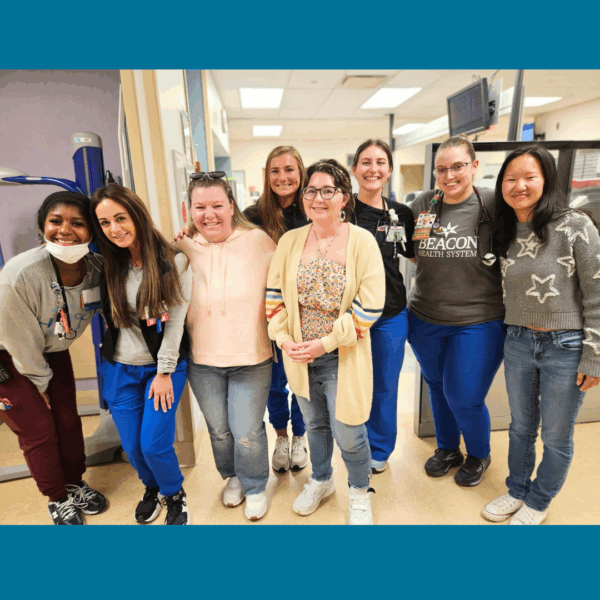
She and her family visited the ICU teams who cared for her when her life had once hung in the balance.
For Dr. Patel, Rachel’s visit came as a surprise. Seeing Rachel standing and reunited with her family reminded him why the hardest days in trauma care are so rewarding.
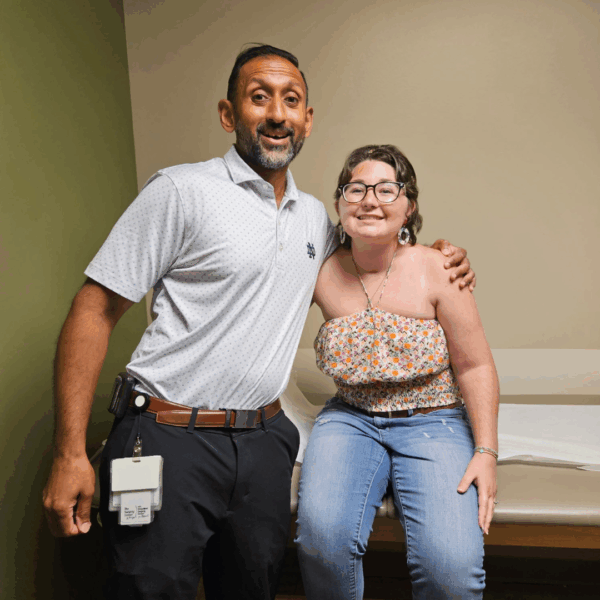
Dr. Neal Patel and Rachel
“That’s the chicken‑soup part of the day,” he said. “Those moments are rare. To see this young lady get to have a full, cherished life filled with great memories with her family — that’s what keeps you going.”
He describes Memorial’s trauma care as rooted in shared responsibility.
“There’s a sense of responsibility to take care of this town,” Dr. Patel said. “Everyone shows up and treats these patients like their own family.”
That sense of collaboration is something Dr. Matt Koscielski, ICU and Pulmonary Services Medical Director, says defines the program’s strength.
“The Memorial Trauma Program’s strength is the working relationships of physicians from many specialties who participate in treating trauma patients,” Dr. Koscielski said. “The strong collaboration of trauma surgeons, intensivists, emergency room physicians, rehabilitation teams and many other specialties enhance care and leads to improved outcomes.”
Every role matters, he emphasized.
“Each provider within the Memorial Trauma Program plays a critical role that impacts each trauma patient.”
Rachel’s recovery, Dr. Koscielski said, is one powerful example of what that collaboration can make possible.
“Her success story is a wonderful outcome made possible due to the tireless efforts of the healthcare providers of the Memorial Trauma Program.”
 Today is a new day
Today, about a year and a half after the collision, Rachel’s recovery continues through steady, faithful work. Progress is measured not by how far she still has to go, but by what she can do today that she could not do yesterday.
She is walking independently, without a walker or a cane. She manages her routine activities of daily living on her own. She’s reading, writing and getting back to enjoying being in the kitchen and cooking again. She continues with her therapies and goes to the gym with her dad three to four times a week, strengthening both her body and her confidence.
“I’m being very patient with God’s plan for me,” Rachel said.
For Rachel and her family, healing has never been about rushing toward an ending. It has been about learning to receive what is given each day: strength for the moment, grace for the work ahead and trust for what has not yet unfolded.
Her mom puts it simply.
“You haven’t met a more determined, independent, strong young lady than this girl right here,” Michelle said.
“Today is a new day” is no longer just a saying for the family. It’s a way of living, a reminder that healing, like manna, often comes daily, quietly and in just enough measure to keep going.