Our Take: Beacon stroke specialist explains stroke symptoms after Sen. Chris Murphy’s hospitalization
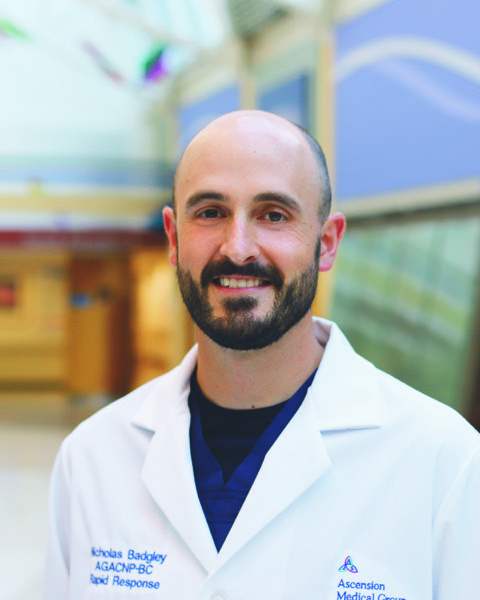
Nicholas Badgley, NP
Stroke Program Coordinator
Beacon Kalamazoo
The recent hospitalization of Chris Murphy, a U.S. senator from Connecticut, has brought renewed attention to the warning signs of stroke and the importance of seeking care quickly. Public reports indicate Murphy experienced numbness in his arm before being diagnosed with a stroke and transferred for specialized care.
How can you recognize the signs of a stroke? Who is most at risk? And what should you do if you suspect someone is having one? Beacon Nurse Practitioner and Stroke Program Coordinator Nicholas Badgley, NP, at Beacon Kalamazoo shares what everyone should know.
Q: What is a stroke, and what happens in the brain during a stroke?
A: A stroke is a medical emergency in which blood flow to part of the brain is suddenly interrupted. There are two main types of stroke:
-
- Ischemic stroke represents roughly 87% of all strokes and is commonly caused by a blood clot in one of the arteries feeding the brain.
- Hemorrhagic stroke represents roughly 13% of strokes and occurs when an artery feeding the brain ruptures and bleeds.
In both cases, time is critical. The lack of oxygen and glucose delivery to the brain tissue can cause the brain cells to die within minutes. The longer blood flow is interrupted, the more brain cells are lost.
Q: What are the warning signs of a stroke, and how can the B.E. F.A.S.T. acronym help you spot one?
A: The important thing to know about stroke symptoms is that they come on suddenly. The B.E. F.A.S.T. acronym is an easy way to remember the most common signs of a stroke:
B- Balance: Sudden loss of balance or coordination.
E- Eyes: Sudden changes in vision, including double vision or loss of sight.
F- Face: One side of the face droops or appears uneven.
A- Arm: Weakness or numbness in an arm or leg.
S- Speech: Slurred speech, difficulty speaking or trouble understanding others.
T- Time: Call 911 immediately- stroke is a medical emergency.
If you notice even one of these signs, call 911 right away. A stroke requires immediate medical attention: Time is brain.
Q: Can a stroke start with symptoms that seem minor, like numbness in an arm?
A: A stroke may cause subtle numbness, tingling or mild weakness in an arm, a leg or one side of the face. These symptoms are easy to dismiss. Symptoms that improve or disappear can indicate a transient ischemic attack (TIA), often called a “mini-stroke,” caused by a brief interruption of blood flow to the brain. Both stroke and TIA involve inadequate blood flow and need immediate medical attention to prevent lifelong disability and future strokes.
Q: What should someone do if they think they’re having a stroke or see stroke symptoms in someone else?
A: Call 911 immediately — don’t wait. Utilizing EMS allows the patient to be assessed immediately and alert the hospital ahead of time. This ensures that the stroke team is ready to receive the patient and begin treatment on arrival. Time is brain, and the faster a patient can be treated, the better their chances of making a full recovery. Some patients, like Senator Murphy, are taken to a Comprehensive Stroke Center where specialists can provide advanced treatments and procedures in addition to around-the-clock specialty care. Some of these treatments are time sensitive:
-
- Clot-busting medication, given through an IV, can dissolve the clot in eligible patients with ischemic stroke. It must be given within a few hours of the onset of symptoms, and the sooner it’s given, the greater the benefit.
- Mechanical thrombectomy, a minimally invasive procedure to remove a clot from an artery in the brain, may be an option for patients up to 24 hours (or longer in some cases) after symptoms begin.
Knowing when the patient was last seen without symptoms, which medications they take and their medical history helps the care team determine which treatments are safe.
Q: Who is at risk for stroke?
A: In short, everyone. Stroke can happen at any age, and we are seeing an increasing number of young people that present with strokes. Some people are at higher risk based on common risk factors:
-
- High blood pressure: This is the leading risk factor with links to ischemic and hemorrhagic stroke.
- Atrial fibrillation: An irregular heart rhythm that can cause clots to form in the heart and travel to the brain.
- Diabetes: Diabetes and stroke are closely linked because high blood sugar damages blood vessel walls over time.
- Smoking: Smoking damages blood vessel walls and increases the likelihood of clot formation.
- High cholesterol: Increased cholesterol levels lead to plaque formation on the blood vessel walls and increase your risk for stroke.
- Obesity, heart disease, heavy alcohol consumption
- Age: Stroke risk increases with age.
- Family history of stroke or previous stroke or TIA
Many of these risk factors can go unnoticed, so it’s important to receive regular screenings to lower your stroke risk.
Q: What can people do to lower their risk of stroke?
A: Fortunately, many of the risk factors for stroke are things we can control. Here are some of the common ways to lower your risk of stroke:
-
- Control your blood pressure: Know your numbers and take blood pressure medication as prescribed.
- Eat a heart-healthy diet: Focus on fruits, vegetables, whole grains and lean protein. Limit your intake of salt, saturated fat and processed foods. Eating patterns like the Mediterranean or DASH diet are good options.
- Stay active: Aim for at least 150 minutes of moderate physical activity each week. This can include things like brisk walking, swimming, cycling or dancing.
- Quit smoking and avoid tobacco products.
- Limit alcohol intake.
- Manage diabetes and cholesterol levels with the help of your care team.
- Maintain a healthy weight and ensure you’re getting enough sleep.
- Get regular checkups: Your provider can screen for silent risk factors like high blood pressure, high cholesterol and atrial fibrillation.
A healthy lifestyle and regular checkups are key in preventing strokes. If a stroke does occur, recognizing the signs and calling 911 immediately gives you the best chance of recovery.
Expert stroke care when every minute matters
Recognizing stroke symptoms and getting treatment quickly can make a significant difference in recovery. Learn more about stroke care, treatment options and the specialists who care for patients across Beacon Health System.
Whether you need emergency treatment for a complex stroke or ongoing support during recovery, you’ll find expert care across Beacon. Beacon Kalamazoo is a Comprehensive Stroke Center, Memorial Hospital of South Bend is a Thrombectomy-Capable Stroke Center and Elkhart General Hospital is a Primary Stroke Center. Together, these nationally recognized programs help ensure patients have access to advanced stroke care when every minute matters.