Mishawaka woman returns to active, pain-free life after minimally invasive treatments for peripheral artery disease
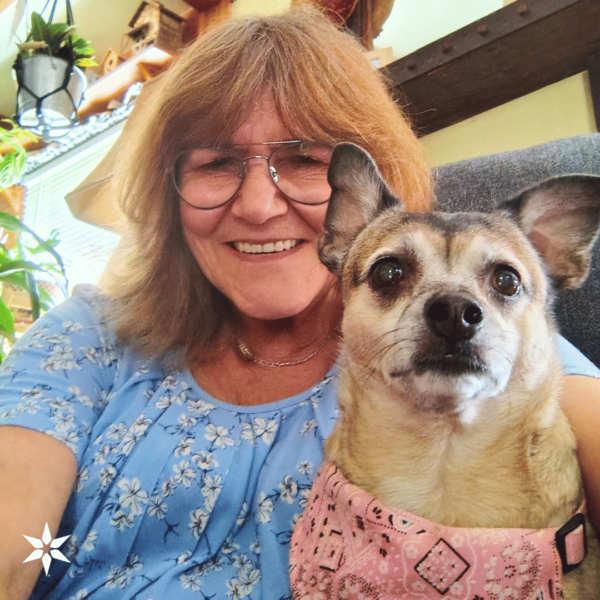
Vickie Kolodziej
Vickie Kolodziej enjoyed a life full of family time and all the little things that made her happy. A former production manager from Mishawaka, she shared her retirement with Denny, her partner of 24 years, three playful dogs, a collection of reptiles, turtles, fish and tending to her thriving indoor plants. Her life was busy and active until it came to a sudden stop.
“After I retired, it felt like I was dragging 50-pound weights on my legs,” Vickie said. “I could barely manage 10 steps. I thought, ‘Maybe I’m just getting older, out of shape.’ But it got worse.”
The relentless pain and tingling in her legs pushed her to seek answers from her primary care doctor. After vascular testing, the diagnosis hit hard: severe peripheral artery disease (PAD), a condition where narrowed arteries choke off blood flow to the limbs, causing pain, cramping, numbness or even a faint pulse in the legs or feet.
Within days, Vickie found herself in the care of Dr. Michael Ginsburg, a vascular and interventional radiologist at Beacon Medical Group Interventional Radiology and Vascular Specialists in South Bend.
“When Vickie came to us, she was in agony,” Dr. Ginsburg said. “For six months, her leg pain had worsened. At first, it struck only when she walked — early calf fatigue and pain we call claudication. But when the pain haunted her even at rest, she knew she needed help. Rest pain signals critical limb-threatening ischemia, a serious stage of PAD that demands urgent action to restore blood flow and save the limb.”
Vickie’s world had shrunk. “I was hobbling with a walker,” she said. “I couldn’t walk my dogs or shop at the grocery store without a scooter. My quality of life? It was rock bottom.”
But Dr. Ginsburg’s determination to help her lit a spark of hope.
PAD with critical limb-threatening ischemia, or low blood flow, requires a multipronged approach, Dr. Ginsburg said. While endovascular or surgical procedures can reopen arteries, long-term success hinges on tackling the largest risk factors that contribute to narrowing of the arteries, or atherosclerosis: smoking, inactivity, obesity, diabetes, high blood pressure and high cholesterol.
“Many PAD patients miss out on this critical foundation,” Dr. Ginsburg said. “In our clinic, we prioritize optimizing medical therapy — medications, lifestyle changes and exercise programs — to boost collateral blood flow and extend pain-free walking.”
Before any procedure took place, Vickie’s care team crafted a plan: medications to prevent blood clots and lower cholesterol, surveillance imaging and lifestyle tweaks to reduce risks. This groundwork was vital to prevent re-narrowing of arteries (restenosis) and lower her chances of a heart attack or stroke.
Then came the procedure: an endovascular revascularization to restore blood flow.
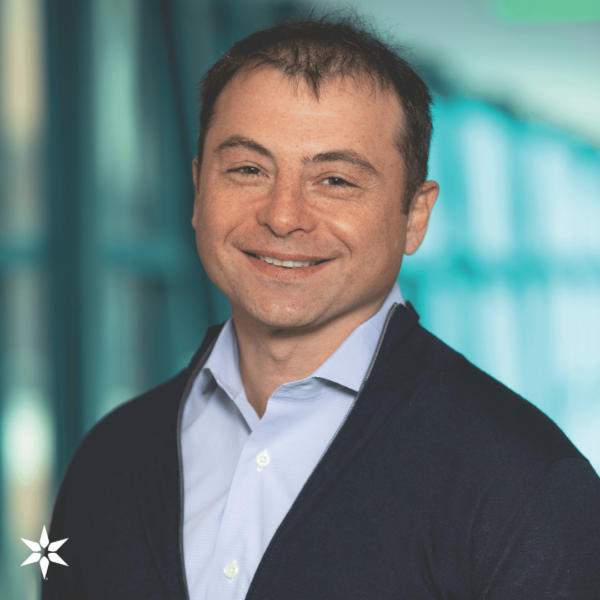
Dr. Michael Ginsburg
Dr. Ginsburg explained the procedure with this analogy: “Think of your arteries as a garden hose system. The arteries in your pelvis are the main hose from the faucet, feeding smaller hoses and sprinklers in your lower legs and feet. Vickie had clogs at multiple levels — ‘inflow’ blockages in her pelvic iliac arteries and ‘outflow’ issues in the smaller arteries below her knees. We had to clear the main hose first to restore strong blood flow to her legs.”
The blockages were severe — Vickie’s right foot had no pulse. Using shockwave intravascular lithotripsy, a cutting-edge technique, Dr. Ginsburg tackled the calcified plaques in her iliac arteries in her lower abdomen.
“It’s like breaking up kidney stones,” he said. “Sonic pulses shatter hard calcium deposits, allowing balloons and stents to open the artery fully. It’s a game-changer when traditional methods fall short.”
Before the procedure, Dr. Ginsburg told Vicki how she would likely need a stepped approach to address that disease in a later stage if her symptoms recur or persist, because while he would fix the inflow arterial stenosis in her iliac arteries, she still had severe femoral artery stenosis in the outflow vessel of her upper thigh.
Relief washed over Vickie after the procedure, but unfortunately, as Dr. Ginsburg anticipated, it was fleeting. Within a year, the familiar pain and tingling crept back, her legs betraying her once more.
To make matters worse, a pinched nerve in her back struck at the same time, adding a new layer of struggle. Vickie turned to neurosurgeon Dr. Neal Patel at Beacon Medical Group North Central Neurosurgery South Bend.
Dr. Patel performed spinal surgery, securing four screws to stabilize her spine.
After three months of recovery, Vickie faced her PAD head-on again. Just two weeks before Christmas, Dr. Ginsburg performed a minimally invasive procedure through small incisions in both groins to treat blockages that had returned.
“This time, we targeted both the iliac artery restenosis and a short-segment blockage in the superficial femoral artery in her upper thigh,” he said. “We used an atherectomy to grind down tough, calcified plaque, followed by drug-coated balloon angioplasty and a stent to keep her right iliac artery open.”
The results were transformative.
Within days, Vickie was bustling about, determined to make the holidays special for her six grandchildren. “I had to keep going,” she said. “Christmas was coming, and those kids were counting on Grandma. By Christmas Eve, I was moving — not sprinting, but moving!”
Through the pain and procedures, Vickie’s spirit remained unbreakable, supported all along the way by Denny and through the care she received. “Dr. Ginsburg was incredible,” she said. “He listened, explained everything, and even called me the morning after surgery to check in. I looked him in the eye and said, ‘Do what you need to do. I trust you.’”
Dr. Ginsburg felt the connection deeply.
“A happy patient is the best medicine,” he said. “Vickie’s trust and resilience made every moment of this journey rewarding. Her gratitude reminded us why we do this.”
Today, Vickie is savoring life again, dreaming of summer adventures with her grandchildren.
Her health journey has left her with a mission: to urge others not to ignore their symptoms. “If your legs feel like they’re stuck in quicksand, don’t wait,” she said. “PAD won’t fix itself. See your doctor, listen to them and act fast.”
Because after all, those special moments with your family are worth fighting for.
Learn more
Beacon Heart, Vascular and Stroke care leads the way in local cardiovascular care. Cardiologists, electrophysiologists, heart surgeons, vascular surgeons, interventional radiologists, stroke specialists, heart failure and rehabilitation team – they are all here at Beacon, delivering the quality care you have come to expect from us.