Leaves of three? What families should know about plant-related rashes
Spending time outdoors whether at day camp, overnight camp or on a family camping trip often means coming into contact with plants you don’t think twice about. But for many families, an itchy rash a day or two later can quickly become an unwelcome part of the experience.

Holly Tuyls, NP
“Not every rash that shows up after being outside is a bug bite,” said Holly Tuyls, NP, family medicine nurse practitioner at Beacon Kalamazoo Immediate Care Woodbridge Hills Portage. “We see a lot of plant-related reactions this time of year, especially poison ivy.”
One of the challenges with plant exposure is that the reaction doesn’t always happen right away. A rash from poison ivy, oak or sumac can take anywhere from 12 to 48 hours to appear, which can make it harder to connect the cause and effect.
These rashes often show up as red, itchy patches sometimes with small blisters and may appear in streaks where the plant brushed against the skin.
A common misconception is that the rash itself spreads. In reality, it’s the plant oil that causes the reaction.
“What spreads is the oil left behind on skin, clothing or even gear,” Holly said. “That’s why washing as soon as possible is so important.”
If exposure is suspected, gently washing the skin with soap and water, ideally within 30 minutes, can help reduce the severity of the reaction. It’s also important to clean clothing, shoes and anything else that may have come into contact with the plant.
For kids at camp, this can be more difficult, which is why providers often recommend simple prevention strategies.
Teaching children to recognize the phrase “leaves of three, let it be” can go a long way, along with encouraging them to tell an adult if they notice itching or irritation starting.
Most mild rashes can be treated at home with over-the-counter creams and by avoiding scratching. But there are times when medical care is the right next step.
If a rash is spreading, causing significant discomfort or appearing in sensitive areas like the face, hands or groin, urgent care can help provide relief and prevent complications.
“Severe itching, swelling or anything that’s interfering with sleep or daily activity is worth having evaluated,” Holly added.
As with many summer concerns, a little awareness and early action can make a big difference.
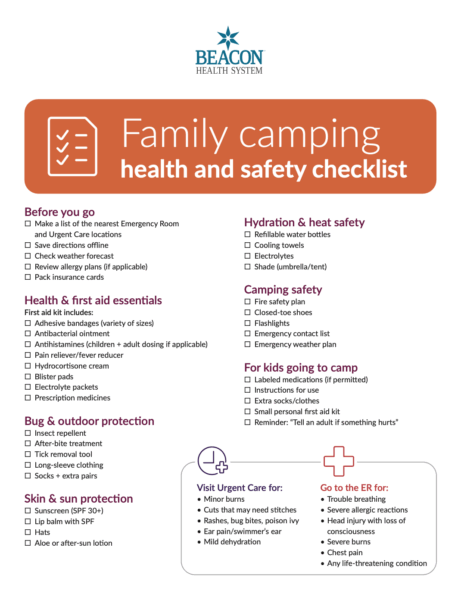 Free download!
Before heading to camp or out on a family trip, most of us pack the basics: clothes, snacks, gear. But one of the most important things to bring is something you hope you won’t need: a well-stocked first-aid kit. Get your free family camping health and safety checklist.