
Bug bites and stings: What to watch for during camping season
Spending time outside is one of the best parts of summer, whether your child is heading to day camp, staying overnight or your family is planning a weekend in the woods. Along with all that fresh air and activity, bug bites and stings are almost guaranteed.
Most of the time, they’re more of annoyance than a concern. But in some cases, they can turn into something that needs medical attention.

Jaclyn Stoddard, PA-C, Beacon Kalamazoo Immediate Care Woodbridge Hills Portage
“Bug bites are very common this time of year, especially with kids who are outside all day,” said Jaclyn Stoddard, PA-C, physician assistant at Beacon Kalamazoo Immediate Care Woodbridge Hills Portage. “The key is knowing what’s expected and what’s starting to look like something more.”
When bug bites are normal — and when they’re not
For many families, bites show up as small, itchy bumps, mosquito bites after a day at camp or a mild sting while playing outside. These typically improve within a few days and can be managed at home with basic care.
Where providers start to pay closer attention is when a bite doesn’t follow that pattern.
If redness continues to spread, the area becomes warm or painful, or symptoms seem to be getting worse instead of better, it may be a sign of infection. This can happen more easily than people expect, especially if kids are scratching bites throughout the day.
“One of the biggest things we see isn’t necessarily the bite itself, it’s what happens after,” Jaclyn said. “Scratching can break the skin and allow bacteria in, which is when we start seeing infections develop.”
Pay attention to ticks
Ticks are another concern that comes up frequently during the camping season. They’re easy to miss and often attach in places you wouldn’t immediately think of checking — along the scalp, behind the knees or under clothing.
Because of that, providers often recommend building tick checks into your daily routine, no matter what kind of camping your family is doing.
“It doesn’t matter if it’s day camp, overnight camp or a family trip, doing a quick check at the end of the day can make a big difference,” Jaclyn said.
A little prep goes a long way against bug bites
Prevention also plays an important role. Using insect repellent, wearing longer layers in wooded areas and avoiding peak mosquito times like dusk can all help reduce exposure. For kids heading to camp, packing labeled supplies like repellent or anti-itch cream and reminding them to speak up if something feels off can help issues get addressed early.
When to seek urgent or emergency care
Even with the best preparation, some bites will need medical attention.
If a bite continues to worsen over a few days, develops significant swelling or shows signs of infection, urgent care can help evaluate and treat it quickly. In some cases, like a bullseye-shaped rash after a tick bite, early evaluation is especially important.
There are also situations where care shouldn’t wait.
Trouble breathing, swelling of the face or lips, or feeling lightheaded after a bite or sting could signal a serious allergic reaction and require emergency care right away.
For most families, these situations are rare. But having a plan before you head out, knowing what to watch for and where to go if something changes can make camping trips feel a lot less stressful.
“Summer should be about enjoying time outside,” Jaclyn said. “A little preparation goes a long way in making sure a minor issue doesn’t turn into a bigger one.”
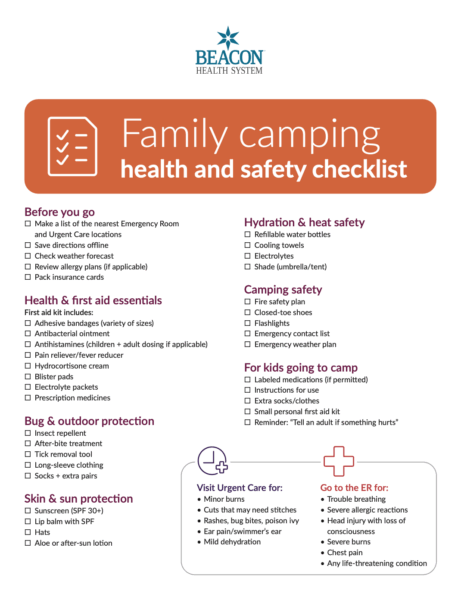 Free download!
Before heading to camp or out on a family trip, most of us pack the basics: clothes, snacks, gear. But one of the most important things to bring is something you hope you won’t need: a well-stocked first-aid kit. Get your free family camping health and safety checklist.