
When a spot on the lung is found (nodules), it is important for you and your doctor to find out what it is. Your doctor will perform a minimally invasive procedure called a robotic bronchoscopy. This will help you and your doctor get the answers needed to make important decisions about your health.
Lung nodules are small spots in the lung that may be found during lung cancer screening (low dose computerized tomography) or incidentally on imaging performed for another reason. Most lung nodules are not cancer, but some need further evaluation.
If a nodule needs further evaluation, your care team will consider its size, location, appearance and growth over time, along with your individual risk factors. Depending on these findings, the next step may be follow-up imaging, a PET/CT scan, a biopsy, or a visit with a lung specialist. When appropriate, your case may be reviewed by a multidisciplinary team that includes pulmonologists, thoracic surgeons, and interventional radiologists.
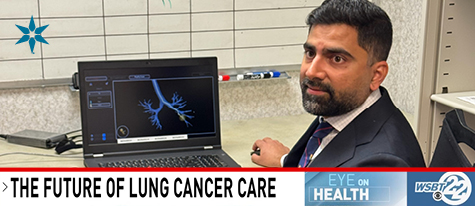
For appropriate patients, Beacon offers robotic-assisted bronchoscopy to evaluate lung nodules. Using advanced navigation technology and a thin, steerable bronchoscope, your physician travels through the natural airways of the lung, with no incisions, to reach small or hard-to-reach nodules and obtain tissue samples for diagnosis. The procedure takes between 90 and 150 minutes to complete.
Beacon uses advanced robotic bronchoscopy technologies, including shape-sensing and electromagnetic navigation systems. Your pulmonologist will choose the approach best suited to the location and characteristics of your nodule.
When appropriate, robotic-assisted bronchoscopy can be combined with endobronchial ultrasound (EBUS) guided lymph node fine needle aspiration (FNA) to sample nearby lymph nodes during the same procedure. For patients being evaluated for lung cancer, this allows diagnosis and staging (checking whether cancer has spread to the lymph nodes) during a single procedure under anesthesia. This can reduce the need for additional procedures and help patients move more efficiently toward treatment planning.
Talk to your provider to learn more.
Watch Eye on Health for a closer look at the procedure.
Recent news and inspiring stories
November 6, 2026

October 29, 2026
October 27, 2026