Triple-negative breast cancer met its match in a patient and her Beacon care team
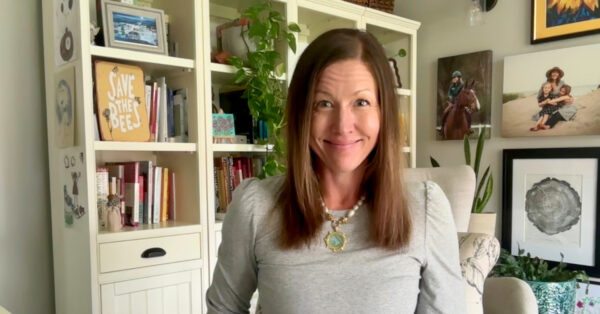
When Clara Swald recently left her final radiation oncology appointment after six years of care and monitoring, it was a time for celebration.
But her feelings were complex. Clara remarked on LinkedIn that the moment was bittersweet. Her care team at Beacon had “supported me through the most challenging times and were there for me at every step,” she wrote. “I am incredibly grateful for their continuous care, even after my recovery. I feel truly blessed because of them. I will miss seeing them.”
The beginning
Clara’s cancer journey started during the COVID-19 lockdown in 2020. She was doing a breast self-exam in the shower and something felt wrong. “My husband confirmed it,” she said. “In my right breast, there was a lump big enough to feel.”
Her primary care physician, Laura Munkel, MD, of Beacon Medical Group Goshen Family Medical Center, urged her to come in right away. Dr. Munkel ordered the mammogram and said Clara would need to be seen quickly.
The mammogram revealed a mass, and within hours Clara had a biopsy. The results came back two weeks later: she had an aggressive form of breast cancer known as triple-negative. Because the cells of triple-negative cancer have few or none of three specific receptors and proteins, they tend not to respond as well to standard treatments. Triple-negative breast cancer also grows and spreads faster than other types of breast cancer.
This crushing news started a chain reaction of activity. Clara soon had appointments with an oncologist, a surgeon and Beacon radiation oncologist Lauren Das, MD, of Beacon Medical Group Oncology Elkhart.
Powerful treatments
Because her cancer was such an aggressive form, Clara’s treatments needed to be aggressive, too. She thought surgery would be the hardest part, but chemo and radiation treatments were far more difficult.
Her treatment began with five long months of intravenous chemotherapy to shrink the tumor before surgery. She went through several chemo medications, all of which were administered through a surgically implanted port. The medications were so strong that she lost her hair after just the second treatment.
Next was surgery. Despite the strength of her intravenous chemotherapy medications, Clara’s surgeon found residual cancer cells. This meant that after completing her radiation treatments, she’d have to face several more months of chemotherapy, this time with pills she could take at home.
Clara had to delay her radiation therapy due to a bout of COVID-19. But she recovered and began 6.5 weeks of radiation treatments with Dr. Das. Side effects are always a possibility, and Clara experienced several, including an unusual reaction to the treatment.
Dr. Das attributed much of Clara’s reaction to a genetic predisposition for radiation sensitivity. Genetic testing revealed the genes responsible for this issue. Dr. Das adjusted Clara’s treatment, prescribed a steroid medication and checked in with her often to continuously monitor her symptoms.
“Clara was her own best advocate and brought any pain or issue to our attention promptly. Her diligence allowed us to help her quickly and have a successful outcome,” Dr. Das said.
With these adjustments and the diligent care of the entire radiation oncology team, Clara completed her radiation treatments. Through it all, the care team was by her side.
“When I say something, Dr. Das listens. Knowing that she’s available if I need additional medication, that’s amazing,” she said. “And it’s not just her, it’s her staff, too. I really love them.”
“My cancer journey was hard, but I had the best team of people supporting me. My family, the network, everyone,” she added.
Embracing the future
Despite profound fatigue, Clara managed to complete graduate school courses while undergoing oral chemotherapy, earning a Master of Science in industrial organizational psychology. After graduation, she was able to launch a new career.
Her medical appointments then shifted to monitoring. She saw Dr. Das twice a year for several years.
“It is always bittersweet to see our patients graduate out of our follow-up clinic,” Dr. Das said. “We are thrilled that they are doing well, but also sad to see them go. Of course, we are always a phone call away if they have an issue in the future.”
Clara continues to follow up with her oncologist twice a year. Although she lives with the fear that her cancer might come back someday, she is resolved to make the most of life.
“As a follower of Christ, I have joy. I’m happy I’m here. I live a productive life,” she said. “I survived cancer for a reason, and for that I’m grateful.”
At 52 years old, she said, “It’s been hard, because the last time I ran was pre-cancer. I have to just do it.”
Today, Clara shares her story in hope of helping others.
“When I post on LinkedIn or Facebook, I’m just reminding people, ‘Hey! Get your mammogram done!’ The worst that can happen is they catch the cancer,” she said. “There is an impact of me sharing my story. If my words make just one or two people get a mammogram and catch the cancer earlier, it will be a success!”