Urgent care or the emergency department? How to make the right call during camping season
When something unexpected happens during a camping trip whether it’s a fall, a burn or a child who suddenly isn’t feeling well, one of the first questions families ask is where to go for care.
Should you head to urgent care, or go straight to the emergency department?
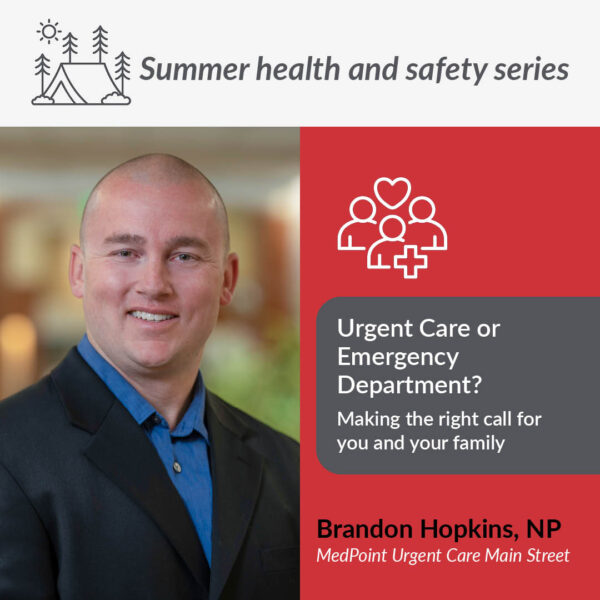 “Knowing where to go ahead of time can make these situations much less stressful. It also helps families get the right level of care more quickly,” said Brandon Hopkins, NP, family medicine nurse practitioner at MedPoint Urgent Care Main Street.
Throughout the summer, many of the concerns families experience while camping can be safely and effectively treated in urgent care.
These are often issues that need prompt attention but aren’t life-threatening.
“For example, we see a lot of things like minor burns from campfires, cuts that may need stitches or rashes from poison ivy,” Brandon said.
Other common urgent care visits during camping season include:
- Bug bites or stings that are worsening or showing signs of infection
- Ear pain after swimming, often related to swimmer’s ear
- Mild to moderate dehydration, especially after long days in the heat
- Sprains or possible minor fractures from outdoor activities
- Blisters or skin irritation that are becoming painful or infected
“These are situations where patients are uncomfortable and need care, but they don’t necessarily require the resources of an emergency department,” Brandon said.
Urgent care centers are equipped to evaluate and treat many of these conditions, often with shorter wait times helping families get back to their plans more quickly.
There are, however, times when the emergency department is the right place to go.
More serious or potentially life-threatening symptoms should always be evaluated in the ER.
That includes:
- Trouble breathing or severe allergic reactions
- Chest pain or pressure
- Head injuries involving loss of consciousness or confusion
- Severe burns or burns covering a large area
- Signs of heat stroke, such as confusion or fainting
- Uncontrolled bleeding
“In those situations, it’s important not to delay care,” Brandon said. “The emergency department has the resources to handle more complex or critical conditions.”
One of the challenges for families is that symptoms don’t always fall neatly into one category.
For example, a child who has been out in the heat all day and starts feeling dizzy and nauseated may be experiencing early heat exhaustion or may also be becoming dehydrated.
Similarly, a bug bite may start as something minor but worsen over time.
“When in doubt, urgent care is often a good place to start. We can evaluate the situation and help determine if a higher level of care is needed,” Brandon said.
Planning ahead can make these decisions easier in the moment.
Before heading out for camp or a family trip, it can be helpful to:
- Know where the nearest urgent care center and emergency department are located.
- Save directions in case cell service is limited.
- Review common symptoms and when to seek care.
“Having a plan ahead of time takes a lot of the pressure off when something unexpected happens,” Brandon added.
For most families, the majority of summer health concerns can be handled quickly and effectively in urgent care.
The key is recognizing when something is more serious and being prepared to act.
“Summer should be about enjoying time together. Knowing where to go for care helps make sure a small issue doesn’t turn into a bigger one,” Brandon said.
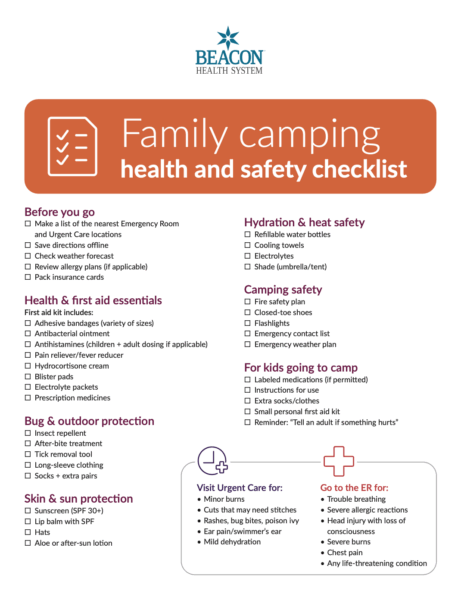 Free download!
Before heading to camp or out on a family trip, most of us pack the basics: clothes, snacks, gear. But one of the most important things to bring is something you hope you won’t need: a well-stocked first-aid kit. Get your free family camping health and safety checklist.