Meet the team behind Memorial Hospital’s new ICU
When patients require intensive care, they and their families are often facing some of the most difficult moments of their lives. Opening in late October, Memorial Hospital’s new Intensive Care Unit combines advanced technology and thoughtfully designed spaces with its greatest strength: the team of caregivers who provide expert, compassionate care every day.
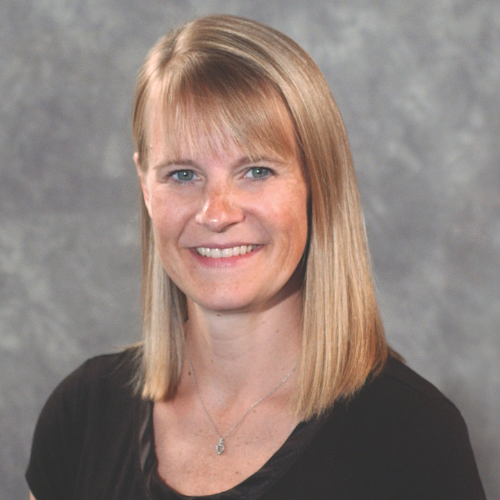
Dr. Michelle Thompson
“Having access to advanced critical care close to home means patients can receive highly specialized treatment without leaving their community and support systems behind,” Memorial Hospital Vice President of Medical Affairs Dr. Michelle Thompson said. “This new ICU reflects our dedication to advancing clinical excellence, supporting our caregivers with the best possible environment in which to provide care, and meeting the needs of our community for years to come. Most importantly, this investment reflects our belief that the people of our community deserve access to exceptional care close to home.”
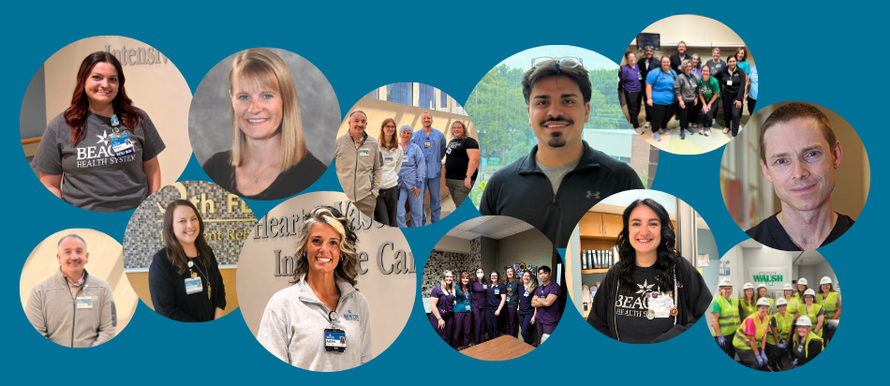
Behind that commitment is a multidisciplinary team of physicians, nurses, therapists, technicians and support staff whose expertise, compassion and dedication help patients and families navigate some of their most challenging moments. Meet some of the extraordinary associates and teams who will bring the new ICU to life when it opens this fall.
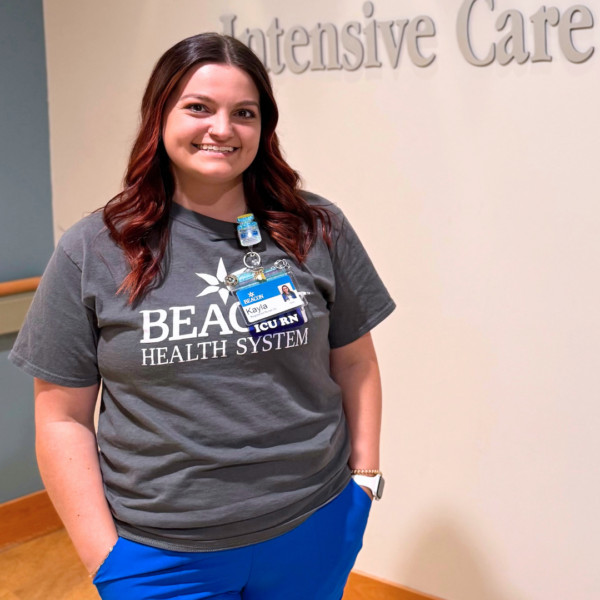
Mikayla Bodle, BSN, RN
How does caring for a patient in the ICU differ from caring for patients elsewhere in the hospital?
We take care of the sickest adult patients in the hospital and have to be ready to advocate for them in every aspect of their care. These patients are often sedated, without a voice of their own and sometimes without family. Not only do we care for patients with complex critical needs medically, but we also have to be their eyes, ears and voice throughout the process. ICU nursing also requires additional training on medications, treatments, procedures and devices that aren’t used elsewhere in the hospital.
What are some of the things you are looking forward to in the new ICU space?
I can’t wait for all of the new equipment, beds, monitors, etc. I enjoyed working in the old ICU so much, so I can’t wait to see how they’ve redone the space and added new areas and supplies to help us care for our patients. I am also looking forward to having more space dedicated to patient families so we can hopefully bring them a little comfort while they are supporting their loved ones.
What does it take, beyond clinical skill, to be part of this ICU team?
You have to be able to rely on your team when you need them and know when to ask for help. There is so much going on in the ICU at all times, no one would be able to handle that alone. We all rely on each other so much both at work and outside of work. In addition to clinical skills and critical thinking, being able to support your team members but also accept care and support from them when you need it makes a big difference working in such a heavy environment.
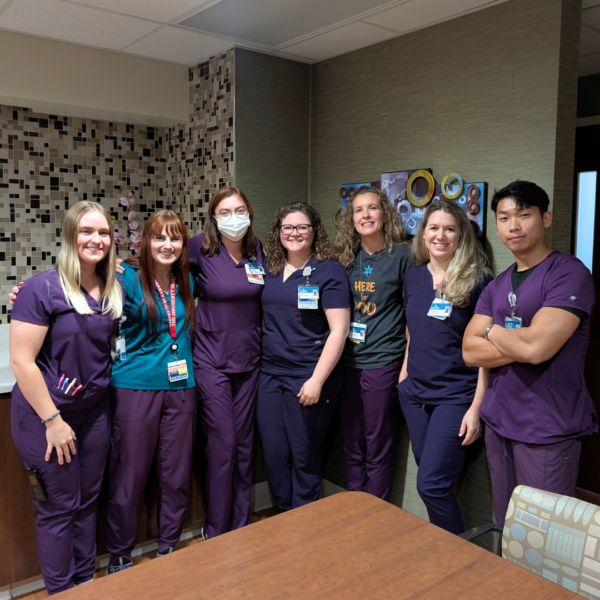
Pictured, L-R: Emma Placke, MS, RDN; August Corso, RDN, LD, CNSC; Halie Lande, RD, LD; Kelsey Rhodes, RDN, LD; Renee Jachura, MS, RD, LD; Cecily Wise, MA, RDN, LD; Wesley Chan, MS, RDN
Many people may not realize nutrition is part of the healing process. Why is nutrition so important in the ICU?
People in the ICU are very sick and they’re working really hard to heal. They need glucose to fuel the work their cells are doing and protein to rebuild skin and muscle and bone. Without nutrition, patients’ bodies will start to cannibalize themselves by pulling protein from the muscles, breaking down fat to make glucose and ketones, and leach minerals from bone. While that cannibalization may help sustain a patient for a little bit, this all leads to worse clinical outcomes, higher risk for infection, higher morbidity and mortality, longer hospital stays, more readmissions and more work the patient has to do to recover. Providing our critically ill patients with adequate nutrition allows us to set them up for success in other treatments as well including surgery and rehab — nourished bodies just do better all around.
How do dietitians collaborate with physicians, nurses, pharmacists and therapists to support patient recovery?
There is a ton of collaboration needed to get patients the nutrition they need. I rely on my nurses to track meal intakes, run enteral nutrition [feeding tube] and communicate to me when there is a problem. I work with pharmacy when a patient is getting parenteral nutrition [nutrients delivered intravenously] and discuss if changes need to be made to medications because there is a food-drug interaction. Speech therapy will work with a patient on dysphagia [difficulty swallowing] treatment and finding what kind of texture or modified diet a patient needs to eat safely. Social workers help ensure patients will have all the supplies they need for enteral or parenteral nutrition at home and figure out what the best plan for discharge is for a patient. Doctors of course are managing the care plan and can be excellent advocates for patient nutrition. There’s a lot of moving parts in patient care and I couldn’t do my job without the whole interdisciplinary team.
What is the most rewarding part of your work?
For me, seeing patients who are doing well with their treatments and recovery plan is so rewarding. I know that nutrition has played a role in the care of all patients, and patients who are doing well on their road to recovery are patients who have been given all the building blocks they need to make that progress.
Since joining Memorial’s ICU in October 2019, following five years on the oncology floor, Christopher has found purpose in supporting both the care team and the families who rely on the ICU during some of life’s most difficult moments.
For Christopher and so many of his colleagues, the new ICU represents more than a new location. It’s an opportunity for the team to continue growing together and building an even brighter future for patients and families.
“What I enjoy most is the teamwork and being here for families who are facing a bad season in their lives,” he said.
As a unit assistant, Christopher works behind the scenes to help the unit run smoothly while also supporting caregivers throughout each shift.
“I try to show respect and encourage each member of the team,” he said. “I’m always willing to help and lead when needed.”
Just as important to him is helping families feel welcome and supported during stressful and uncertain times. Whether it’s offering assistance, a listening ear or a lighthearted moment, he strives to make a positive difference in their day.
“I want families to feel comfortable and know they’re welcome here,” he said. “Most importantly, I want to give them hope and make them smile or laugh.”
As the ICU prepares to move into its new home this October, Christopher is excited about the opportunities the new space will bring.
“I’m looking forward to having more room, being more organized and starting a new season with new opportunities,” he said.
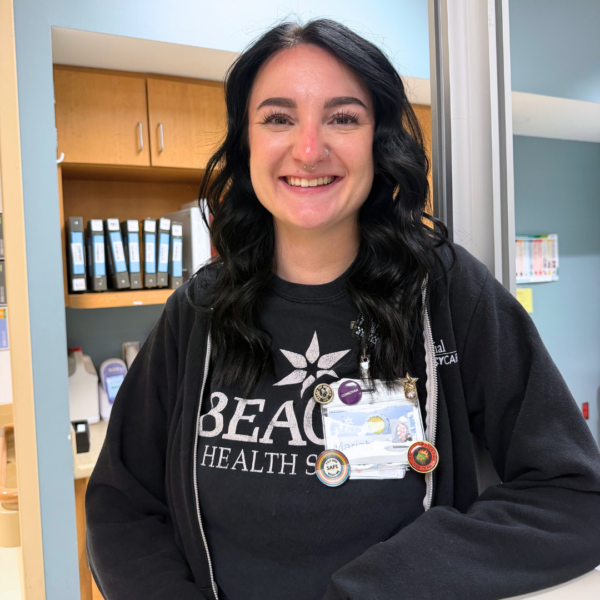
Mariah Guillaume
What do you enjoy most about working in the ICU?
I would say building relationships with patients and their families. If I can get my patient to smile and laugh, I call it a win. I like to make them feel as comfortable as possible during their ICU stay. Granted, sometimes easier said than done – who wants to be in the hospital? No one. But if I can bring them a little joy and comfort, I’m happy. I don’t treat them as my “patient,” I treat them as if they were my family.
And then, not only building relationships with patients and their families but also coworkers! How we treat each other and work together can really make or break the day.
What are some ways you help support the care team each day?
Some ways I help support the care team each day really starts with building relationships and being someone my coworkers know they can rely on. Working in the ICU is very team-oriented, and no one can do it alone. I try to pay attention to what’s going on around the unit and step in wherever I can, whether that’s helping with patient care, answering call lights, grabbing supplies or simply being an extra set of hands when things get busy. I think getting to know the people you work with is a big part of that, because over time you learn how everyone works and what they may need before they even have to ask. I also try to bring some humor and positivity to the unit when I can. The ICU can be a very heavy place, so being able to support each other and laugh together sometimes makes a big difference.
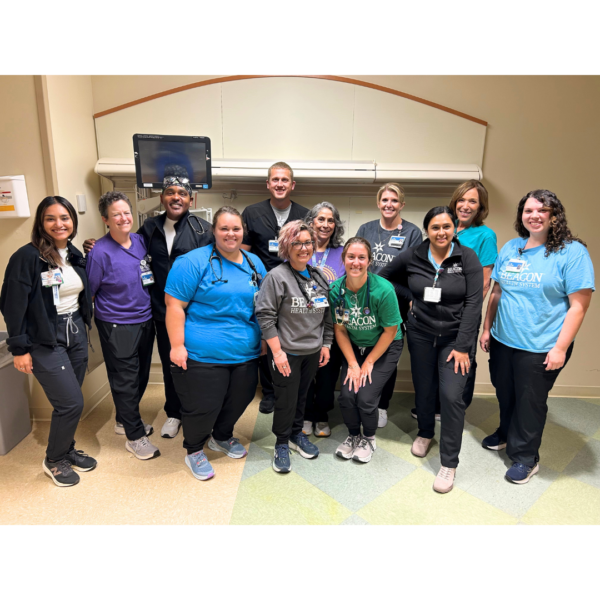
Back row, L-R: Jackie Ibarra, Diane Oudes, Hassan Hashil, Alex Soptich, Char Monges, Mindy Hunziker, Melissa Bybee, Alexis Youngs Front row, L-R: Bekah Johnson, Shannon Green, Christin Chris, Fany Ortega
Why are respiratory therapists such an important part of the ICU care team?
In the ICU, every second matters — and respiratory therapists bring a very specific skill set that helps keep patients safe. We’re trained in airway management, mechanical ventilation, respiratory assessment and emergency response, so we’re constantly collaborating with nurses and physicians to make sure each patient gets exactly the right level of support. Our ability to quickly interpret changes and fine tune life-sustaining therapies is a big part of why patients do well.
What does collaboration look like among respiratory therapists, physicians and nurses in the ICU?
Collaboration in the ICU is constant — it’s just part of the rhythm of the day. We’re always checking in with nurses and physicians, sharing updates, adjusting treatments and responding together when a patient’s condition changes. Each team member brings a different perspective, and when we combine those strengths, we’re able to build a care plan that fits each patient’s needs perfectly.
As you prepare for opening day, what are you most looking forward to for the patients, families and community we serve?
We’re looking forward to what this new ICU will mean for the people who trust us during some of the hardest moments of their lives. The advanced technology, the thoughtful design and the teamwork it supports will help us deliver the highest level of care. Knowing that we’ll be able to serve our community even better — with more comfort, more capability and more compassion — is incredibly meaningful.
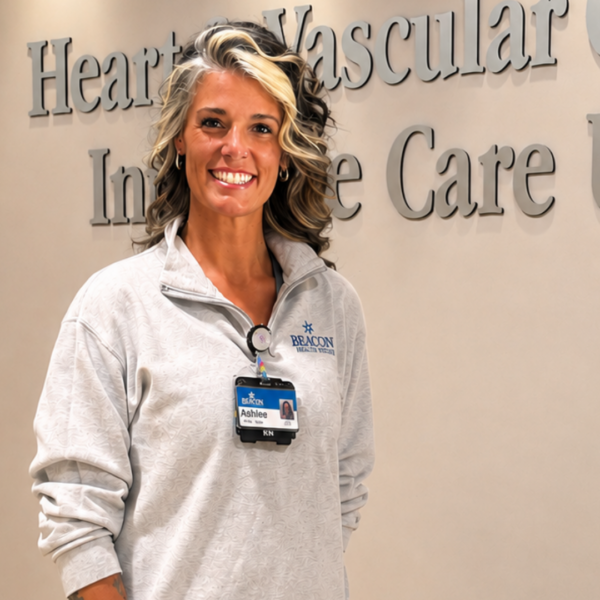
Ashlee Lampos, BSN, RN
How does caring for a patient in the ICU differ from caring for patients elsewhere in the hospital?
Caring for an ICU patient is different from patients elsewhere in the hospital in many different ways. One major difference is the acuity. We see a multitude of acuities come through our doors ranging from a post-op patient who just needs to be closely monitored overnight, to intubated and sedated patients who were involved in serious accidents or major health crises.
What are some of the things you are looking forward to in the new ICU space?
I am excited for the new ICU and to be able to care for more patients and their families, I am excited to have our space back and be located closer to everything. I look forward to making memories there like I did in the old ICU.
What are some of the most rewarding moments in your work?
Some of the most rewarding times in this line of work are when we have patients come back to visit us. We are sometimes left with the question of, “I wonder how they are doing now?” We see people on their very worst days. It brings so much joy and the opportunity to feel like you had some part in something so much bigger in this world. Seeing some of the bad things we see, it is so refreshing to get updates on some of the patients who we care for.
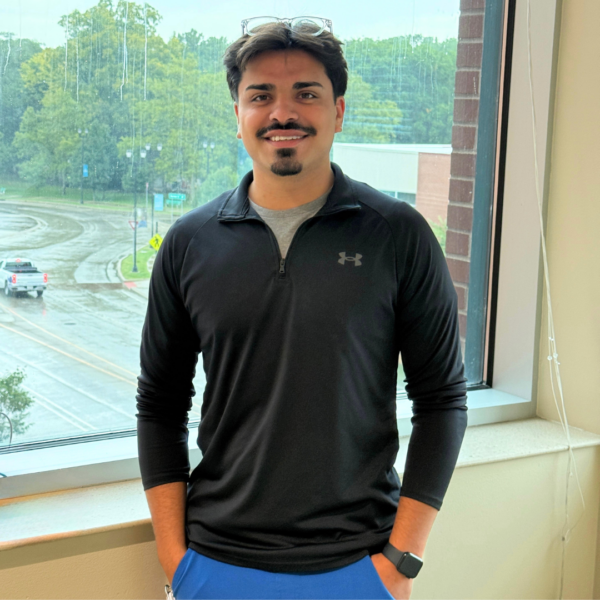
Elian Magaña, BSN, RN
ICU care is often described as a team effort. What does collaboration with physicians, RTs, PT/therapists and pharmacists look like on a typical day?
It’s truly a team approach. Everyone brings a different area of expertise, and the best outcomes happen when we communicate, challenge each other and work toward the same goal for the patient. We take pride in learning from one another and growing together as a team, regardless of experience or role. Everyone brings something different to the table, and we’re always willing to support each other and learn from one another.
What does a welcoming environment mean for families going through a critical illness journey, and how do you hope the new ICU will support their experience? What are some of the things you’re looking forward to in the new ICU space?
Critical illness is overwhelming for families, so having a space that feels comfortable, private and welcoming can make a difficult experience a little easier. I’m hopeful the new ICU gives families a place where they feel informed, supported and included in their loved one’s care.
I’m excited for a space that supports both our patients and our staff. Having a modern environment designed around critical care will make a big difference in how we deliver care and work as a team.
What are some of the most rewarding moments in your work?
Seeing a patient make progress after such a critical point in their life is incredibly rewarding. One of the best parts is when patients come back to visit us and share how well they were cared for throughout their entire journey, especially by the teams on other floors as well. Hearing them praise the expertise and compassion of those teams reminds you that the work we do in the ICU and at Memorial is just one part of a much bigger team effort. It’s moments like those that remind you why you do this.
-
-
- Carmelo Pratico, PharmD, BCPS
-
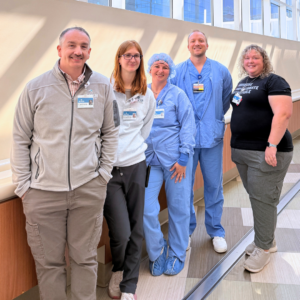
- (L-R): Carmelo Pratico, Director of Pharmacy Services; Courtney Grace, Certified Pharmacy Technician; Stephanie Schaal, Certified Pharmacy Technician; Jacob Rigdon, Clinical Pharmacist Specialist, Surgery; Mindy Deubner, Clinical Pharmacist Specialist, Critical Care
What do most people not realize about the role of pharmacy in critical care?
-
Many people think of pharmacists primarily as the professionals who dispense medications, but the role extends far beyond that. Critical care pharmacists are actively involved in clinical decision-making, helping optimize therapy, prevent medication-related complications and improve patient outcomes. Behind every medication order are numerous checks for safety, appropriateness, interactions and effectiveness. Pharmacists bring specialized medication expertise that helps ensure critically ill patients receive the best possible care.
What does collaboration between pharmacy, ICU physicians and nurses look like on a typical day?
Collaboration is constant. Pharmacists review medication orders throughout the day, participate in interdisciplinary rounds and work directly with physicians and nurses to address patient-specific medication needs. Whether it’s recommending adjustments to antibiotic therapy, helping manage pain and sedation, reviewing laboratory results or ensuring medications are available when needed, pharmacists serve as a resource to the entire care team. The shared goal is to provide the safest and most effective care for every patient in the ICU.
What are you most excited about as the new ICU prepares to open?
One of the things I’m most excited about is having our pharmacy satellite rejoin the ICU space. This brings our surgical and critical care pharmacy specialists together in a shared location closer to where patient care is being delivered. Being embedded within the new ICU and closer to the operating rooms will enhance collaboration and allow us to provide even more responsive support to patients and care teams.
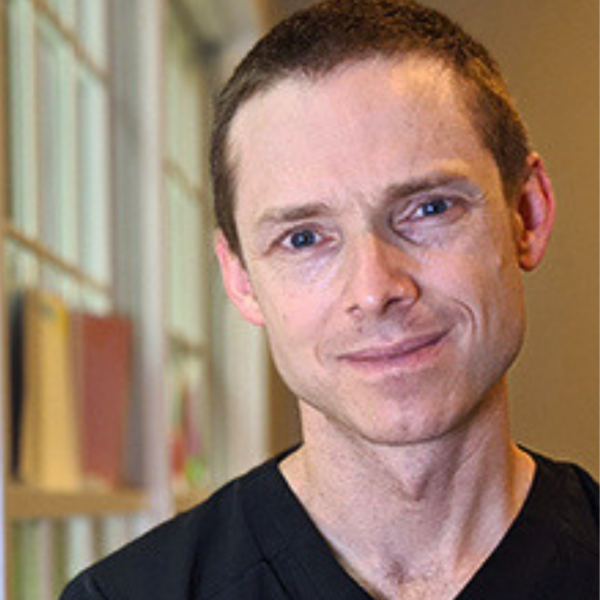
Luke White, DO
One of my earliest memories is joining my dad [Dr. Robert White] on rounds in the newborn ICU. Back then it was just a big room lined with fluorescent lights shining down on the incubators. Now, the Children’s Hospital is a place of warmth and light, a place where families are welcomed in a unit that was built from the ground up around their needs.
I think about those harsh fluorescent lights and the babies underneath them a lot. The ICU of the future — and the one we are working to build today — isn’t just a better room. It’s a system of caring in which everything we do, every treatment we give, every touch we share is a step toward that goal of getting people back to the lives they want to live.
The building is an exciting part of that, but only a part. The foundation of this unit isn’t the steel beams: it’s the nurses, therapists and techs who show up every day to make that difference.
-
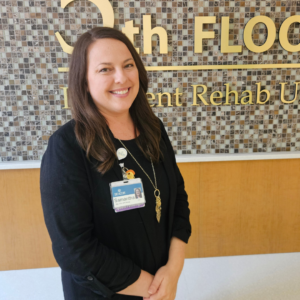
- Samantha Zachary, MA, CCC-SLP
-
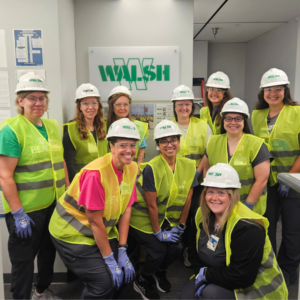
- Front row left to right: Sarah Kuzmicz, PT, Therapy Educator; Ashley Pineda, OTR; Sydney Schubert, PT, DPT; Amber Hooven, PT, DPT. Back row left to right: Amy Gaynor, PT; Dedra Chizum, PT; Jennifer Denniston, PTA; Paige Gauthier, PTA; Delainey Hampel, COTA; Molly Heussner, PT, DPT
Many people may not realize therapy services can begin in the ICU. Could you explain why it’s important for this patient population?
Absolutely. Starting therapy early in a hospital stay can have a significant impact on recovery and help reduce long-term deficits. Physical therapists, occupational therapists and speech-language pathologists work together to help patients regain strength, improve breath support, restore swallowing function, communicate with loved ones while on a ventilator and relearn the everyday skills needed for self-care. Our goal is always to help patients return as close to their prior level of function as possible, and beginning therapy in the ICU helps build the foundation for their recovery journey ahead.
How do therapists collaborate with nursing and physician teams in the ICU?
Therapists collaborate with the entire interdisciplinary team every day in the ICU. We work closely with nurses, nursing assistants, case managers and physicians to discuss patient progress, mobility, diet recommendations and ongoing recovery needs. Each discipline brings a unique perspective, and that collaboration allows us to provide the best possible patient-centered care and support throughout their recovery journey.
What excites you and your team the most about caring for patients in the new space?
Our team is incredibly excited about the new ICU space and the Tower units that will follow. One of the biggest advantages is the size of the patient rooms. ICU patients often have multiple lines, tubes, monitors and pieces of equipment that can make early mobility challenging. Helping a patient get to a chair or take their first steps is much easier when there is space for both the patient and care team to move safely. The new environment will allow us to provide early mobility and rehabilitation more effectively while creating a better experience for patients, families and staff.
Join our team
We’re always seeking talented professionals who share our mission and want to build their careers at Beacon. Learn more or apply for a position today.