Our Take: Beacon physician explains lung cancer after Pope Leo XIV’s diagnosis
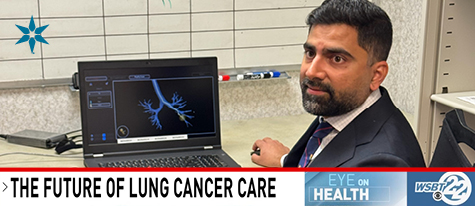
Pope Leo XIV’s recent lung cancer diagnosis has prompted questions about symptoms, risk factors and the importance of early detection. To help us better understand the disease, Beacon pulmonologist Muhammad Saeed, MD, explains what lung adenocarcinoma is, who may be at risk and how screening can help find lung cancer before symptoms appear.
Q: What is lung adenocarcinoma, and who gets it?
A: Lung adenocarcinoma is the most common type of lung cancer, making up about 40% of all cases. It’s a form of non-small cell lung cancer, which accounts for roughly 85% of lung cancers. Adenocarcinoma usually starts in the outer parts of the lungs, in the cells that line the small air sacs. While smoking is still the biggest risk factor, adenocarcinoma is also the most common type of lung cancer in non-smokers. We see it in women, younger adults and people who are non-smokers with additional risk factors.

Muhammad Saeed, MD
Q: Can lung cancer be found before symptoms appear, and who is eligible for lung cancer screening?
A: Yes, and that’s the whole point of lung cancer screening. A low-dose computerized tomography (CT) scan takes a few minutes, involves no needles and uses a fraction of the radiation of a standard CT. Current screening guidelines recommend a yearly scan for high-risk patients who are 50 to 80 years old and have a smoking history of at least 20 pack-years. That means one pack a day for 20 years, or two packs a day for 10 years. The U.S. Preventive Services Task Force includes people who currently smoke or quit within the past 15 years, and the American Cancer Society now recommends screening regardless of how long ago someone quit. Early detection matters because by the time lung cancer causes symptoms, it has often already spread.
Q: What symptoms of lung cancer should people watch for?
A: The most common lung cancer symptoms are a persistent cough, or a chronic cough that changes in character, such as the cough getting worse or sounds different. Coughing up blood, even a small amount, always needs to be evaluated. Other warning signs include shortness of breath, chest pain that’s worse with deep breathing or coughing, hoarseness that lasts more than a few weeks, unexplained weight loss and pneumonia or bronchitis that keeps coming back. Many of these have other causes, but if a symptom lasts more than three weeks, please see your doctor.
Q: If someone has never smoked, what factors can increase their risk of developing lung cancer?
A: Lung cancer in non-smokers is more common than most people realize. Radon exposure is the leading cause in people who have never smoked, and it’s the second leading cause of lung cancer overall. Radon is an odorless, invisible gas that comes up from the ground into homes, and many homes in Indiana have elevated levels. A home test kit is inexpensive and worth doing. Secondhand smoke, a family history of lung cancer and environmental exposures such as air pollution also raise risk. Occupational exposures to asbestos, silica, diesel exhaust and certain metals play a role as well, as does prior radiation to the chest. In some non-smokers, the cancer is driven by specific genetic changes in the tumor, which we can now target with very effective medications.
Q: If a lung nodule or suspicious spot is found during screening, what are the next steps?
A: First, don’t panic. A lung nodule, or pulmonary nodule, is very common, and the vast majority found during a screening are not cancer. Most are small scars from old infections. An abnormal lung screening result usually means we either repeat the CT in a few months to see if the nodule changes, or we gather more information. Depending on the size and appearance, that may include a PET scan, which shows how active the spot is. If the nodule looks concerning, the next step is a biopsy. At Elkhart General, we use robotic-assisted bronchoscopy to reach small nodules deep in the lung through the airways, without any incisions, and we can often biopsy the lymph nodes during the same procedure to help with understanding the spread of the disease process. Every case is closely followed by our pulmonary team.
Q: What’s the most important thing people should know about lung cancer screening today?
A: Screening saves lives, and too few people are using it. Around 25% of eligible Americans get screened. When lung cancer is caught at an early stage, survival rates are dramatically better. Five-year survival is above 60% when the cancer is found before it spreads, compared with less than 10% once it has spread to distant organs. Lung cancer treatment has also changed a lot. Many early cancers can now be treated with minimally invasive treatments like robotic surgery or focused radiation, with shorter recoveries. If you smoke or used to smoke, ask your doctor whether a low-dose CT scan is right for you. It’s a simple, quick test that could save your life.
Advanced lung cancer screening and care
Early detection can make a meaningful difference in lung cancer outcomes. Elkhart General Hospital has earned the GO2 for Lung Cancer Center of Excellence designation for incidental pulmonary nodules and has been re-attested as a Center of Excellence for Lung Cancer Screening, recognizing its commitment to helping patients receive timely evaluation, diagnosis and follow-up care.