Stroke care
When a stroke occurs, time matters. How quickly a blood clot is removed or blood vessels are repaired is critical.
When a stroke occurs, time matters. How quickly a blood clot is removed or blood vessels are repaired is critical.
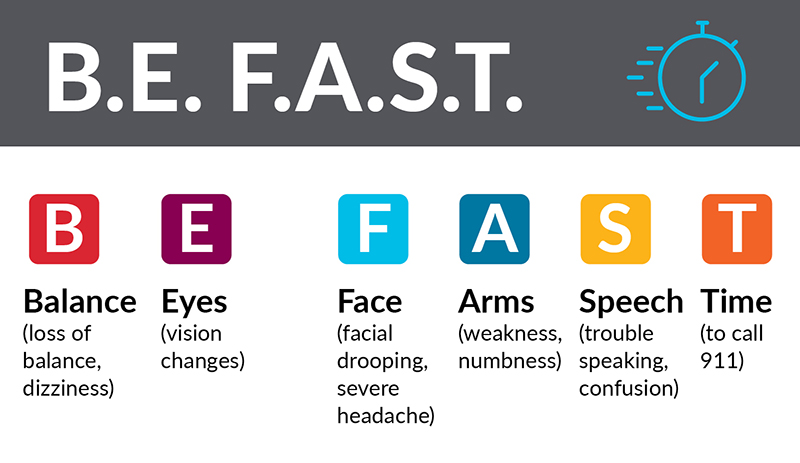
B.E. F.A.S.T.
To help you prevent the occurrence of a stroke, a good first step is to evaluate your personal traits or lifestyle habits. While there are uncontrollable risk factors like age, gender, heredity and race, you can treat or control other conditions or behaviors – like smoking or drinking, physical activity or high cholesterol.
By answering these questions, you can start to better understand your risk:
If you answered “yes” to any of these questions, it may be important for you to talk to your primary care doctor about your risk for stroke.
Your provider may suggest lab tests for cholesterol, blood sugar, blood pressure and others to measure how well your heart is functioning. They may also use the following tools to help determine your risk for heart disease and stroke risk:
Our emergency services — including a specialized stroke team — are here 24 hours a day. A neurologist and other experts will act immediately to evaluate and treat you. Our outpatient and in-hospital rehabilitation for heart and stroke patients and other services are also here to help.
Did you know:

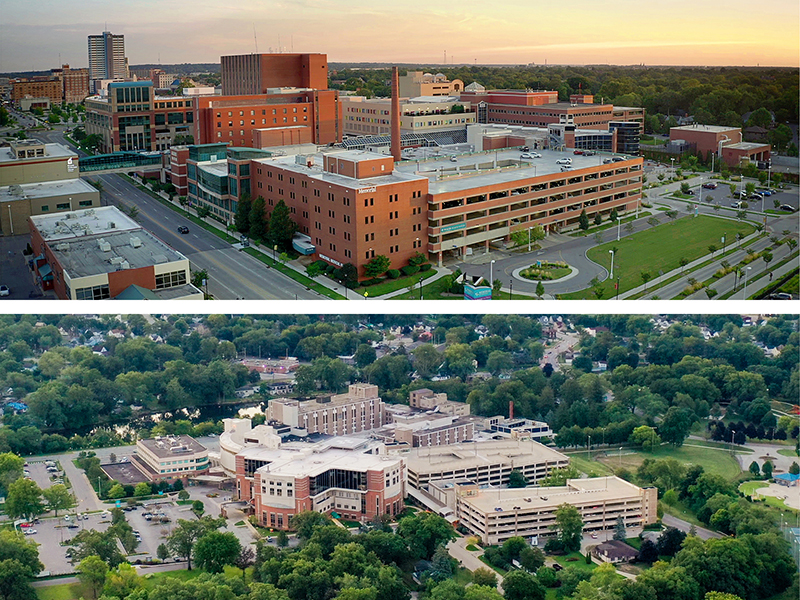
Both Elkhart General Hospital and Memorial Hospital of South Bend have advanced stroke certifications by The Joint Commission*. This means patients can expect the highest quality stroke care possible in an environment that’s uniquely developed to care for the urgent needs of people experiencing a stroke.
Memorial Hospital’s Memorial Leighton Trauma Center is the region’s only verified Level II Trauma Center. It works with MedFlight, the only medical flight service in Michiana. Memorial Hospital is also certified as an Advanced Thrombectomy-Capable Stroke Center and Elkhart General Hospital is certified as a Primary Stroke Center by The Joint Commission*.
Beacon Kalamazoo has earned the designation Comprehensive Stroke Center by The Joint Commission*, a national healthcare accreditation organization. That means they deliver 24/7 emergency stroke care for even the most complex cases. Their highly specialized stroke care helps support better outcomes at a time when you need it most. It also earned a Stroke Care Excellence Award (™) in 2025 for superior clinical outcomes in the care and treatment of stroke by Healthgrades.
*The Joint Commission’s standards are developed in consultation with healthcare experts and providers, measurement experts and patients. Scientific literature, expert consensus, onsite observations and interviews are other measures used to assess performance.
Our hospitals are equipped with transmission technologies that receive real-time patient data from emergency medical service (EMS) providers enroute to the hospital, both in our ambulances and MedFlight helicopters. When this data is sent ahead, the team can prepare for you before you arrive.
Your medical journey doesn’t end once you are stabilized. Following your immediate stroke care, you will likely be admitted to the hospital. If you do not already have a primary care provider, we will assist in you identifying one. We will also assist in coordinating outpatient services or follow-up care, connecting you with resources to get you back to your life.
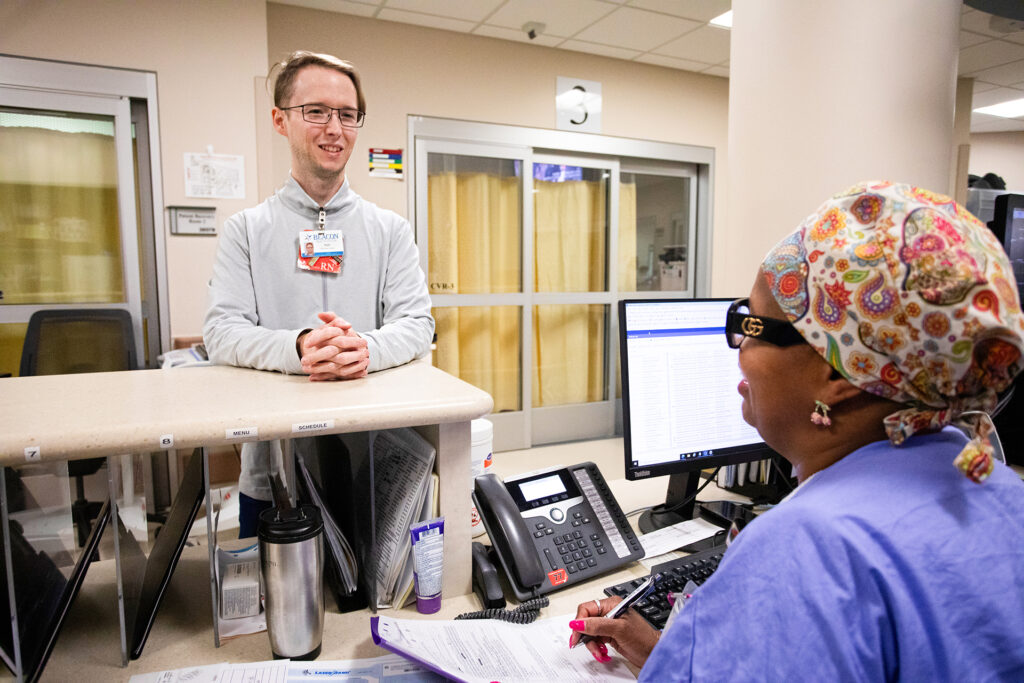
Let us keep you up to date on stroke prevention and care by sending you our Stroke Awareness email. We will share information about signs of stroke, steps to take to prevent stroke, details about our emergency care services and more!
Our team includes care coordinators. These people will guide you through insurance questions, surgical plans and rehabilitation or therapy that follows your procedure.
Having a stroke recovery care plan after a stroke is important. We listen to understand you and your health concerns. Then, your care team of doctors, nurses, physical therapists, occupational therapists and speech pathologists works with you to create a care plan that’s right for you. Our inpatient rehabilitation care team provides therapies and monitors your progress to help you meet your goals.
Your care doesn’t stop when you leave the hospital. We can connect you to transitional care in your home, an outpatient rehabilitation center or a skilled nursing facility. Our goal is to improve your quality of life after a stroke.
At Beacon Kalamazoo, we provide a stroke support group for stroke survivors, including those who may still be in the hospital, loved ones and caregivers. During support group meetings, we provide encouragement, emotional support and discuss many different topics. Our stroke support group meets on the third Tuesday of every month from 3 to 4 pm. To join, please call in or use the link below.
Video call link: https://meet.google.com/cyd-krms-ake
Or dial: (US) +1 929-256-1184 (PIN: 160 951 538#)
More phone numbers: https://tel.meet/cyd-krms-ake?pin=9554783818040