Eye on Health: Beacon Sports Medicine specialists and patient team up on pickleball prevention tips
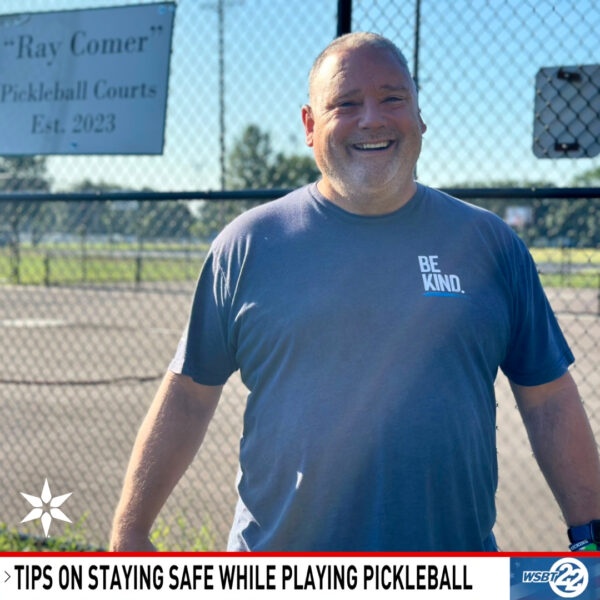 Derek Klute’s day on the pickleball court ended in an instant. “It was my turn to receive serve, so as the serve comes I step up, and just as I do, my right Achilles ruptures and I’m laying on the ground,” Derek recalls.
His story is becoming increasingly common as pickleball explodes in popularity across America. With 48.3 million adults now playing, which constitutes nearly 20 percent of the adult population, urgent care centers and emergency rooms are seeing an increase in pickleball-related injuries among a certain player demographic.
Dr. Mitchell Daugherty of Beacon Bone & Joint Specialists says the demographics tell the story. “There was a study published by the American Academy of Orthopedic Surgeons in September of last year where they looked at ER data across the country over several years for patients that presented to the ER with a pickleball injury, and about 90 percent of those patients from that data were age 50 and older.”
The issue often stems from inactive lifestyles during the week followed by intense weekend play.
“The biggest thing is, when I was playing tennis I was 22-years-old. When I was playing pickleball, I was 60,” Derek says. “I was walking with my dog a lot, getting steps in, but that’s not even close to what was going on here.”

Dr. Mitchell Daugherty
Beacon physical therapist Tom Henry sees this pattern regularly with “weekend warriors” who aren’t staying active throughout the week but jump into demanding sports on weekends. While pickleball is a great sport adaptable to all ages and lifestyles, newcomers need to ease themselves into it. With constant starts and stops and running forward and backward to reach balls, pickleball puts significant stress on the tendons and ligaments of the lower leg.
Common injuries include sprains, strains, chronic pain flare-ups, and Achilles tears like Derek experienced.
“One great way to prepare is just to do strength training, also get some better flexibility, maybe of your upper and lower body, maybe something that involves balance,” Tom says. He also suggests warming up with movements like lunges before playing.
Klute, who has recovered without surgery and returned to walking his dog regularly, has advice for newcomers: “The court’s quite a bit smaller than tennis, plus I was playing doubles. It looks a lot easier and a lot more relaxing than it really is. Take your time, expect that it’s going to be a while until you get up to where you are competitive, and stretch.”
Watch the full story on WSBT’s Eye on Health.
Learn more
When your daily life and routines have changed because of bone fractures, joint, muscle or tendon pain, it’s time to see the experts. Beacon Bone and Joint Specialists provide expert orthopedic care while helping you get back to doing what you love.