When kids don’t speak up: Hidden illnesses and injuries at camp
The communication gap parents don’t always see
For many families, sending a child to camp whether for the day or overnight is an exciting part of summer. It’s also a time when parents rely on their child to communicate when something isn’t right.
The challenge is, kids don’t always speak up.

Sara Utz, NP
“We often see situations where a child has had symptoms for a while before anyone realizes how serious it is,” said Sara Utz, NP, family medicine nurse practitioner at MedPoint Urgent Care Elkhart.
Common injuries during active summer days
Outdoor activities naturally come with bumps, scrapes and the occasional fall.
“Injuries are a common part of summer, especially when kids are active all day,” Sara said.
Most minor cuts and scrapes can be cleaned and covered at home. But deeper wounds, increasing redness or signs of infection should be evaluated.
Sprains and strains are also common, particularly during hiking or sports.
Pain, swelling or difficulty using a limb are all signs that further evaluation may be needed.
Why kids stay quiet at camp
At camp, kids are busy, distracted and often reluctant to miss out on activities. That can lead them to downplay pain, discomfort or symptoms like fatigue or nausea.
“At camp, kids may not report injuries right away,” Sara explained. “That can allow things to worsen. Sometimes it’s not that they don’t notice something, it’s that they don’t want to leave the activity or draw attention to it.”
Because of that, subtle changes can be important signals.
Things like decreased energy, changes in appetite, trouble sleeping or withdrawing from activities may indicate something isn’t right.
Preparing kids to speak up
For parents, preparation starts before camp begins.
Talking through what symptoms to report and reassuring kids that speaking up won’t get them in trouble can make a big difference.
For camp staff and caregivers, encouraging open communication and checking in regularly helps create an environment where kids feel comfortable sharing concerns.
When early care makes all the difference
“When symptoms are addressed early, they’re often much easier to manage,” Sara said.
If something does go unnoticed and worsens, urgent care can help evaluate and treat a wide range of common camp-related concerns.
The goal isn’t to prevent every issue but to make sure small concerns don’t become bigger ones simply because they weren’t shared.
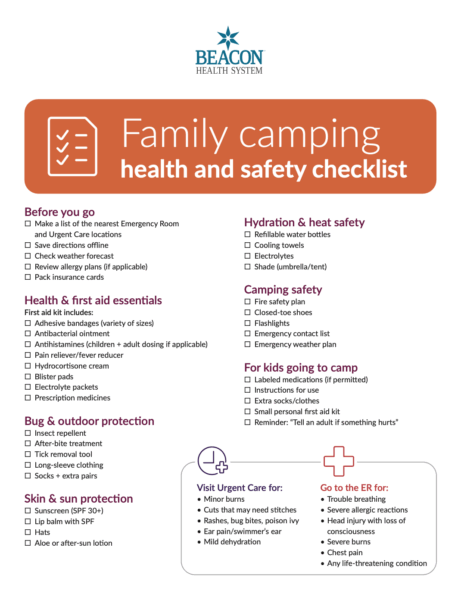 Free download!
Before heading to camp or out on a family trip, most of us pack the basics: clothes, snacks, gear. But one of the most important things to bring is something you hope you won’t need: a well-stocked first-aid kit. Get your free family camping health and safety checklist.