Beacon genetic testing delivered the diagnosis a family had sought for 27 years
Genevieve Nikolai shines with an irresistible sweetness that makes people remember her wherever she goes. She’s a joyful force who may have a big speech delay but still finds her voice, especially when it comes to her love of Mickey Mouse (Mickey, never Minnie). She fills her world with stickers, stuffed animals, and Bluey figurines.
Most days, you’ll find her surrounded by friends at a day service where those with intellectual and developmental disabilities can build relationships and develop vocational skills. There, Genevieve is active doing artwork, photography, and helping build Amish furniture. She’ll happily follow the schedule — unless it involves exercise or chores, which she expertly dodges.
To understand who Genevieve is today at age 27 is to understand the story that shaped her: diagnosed with severe developmental delays in 1999 at just seven months old and finally finding answers through genetic testing at Beacon Health System in 2026.
A diagnostic odyssey
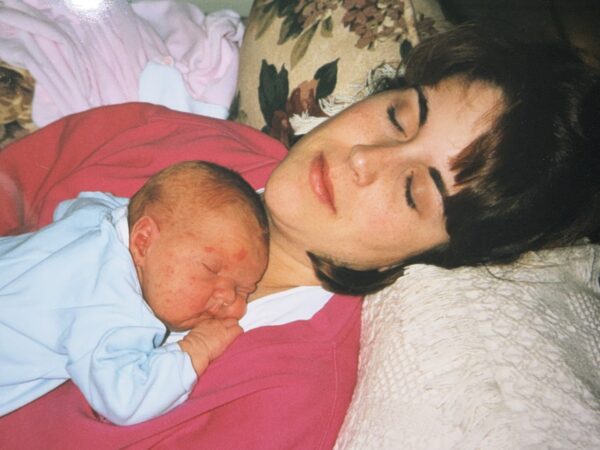
Susan and Genevieve Nikolai in 1999
Susan Nikolai, an experienced pediatric nurse, knew immediately after giving birth that her second child, Genevieve, was different. “One of the first things I noticed was that she had different facial features,” she said. Genevieve didn’t regain her birth weight for almost two months, something that normally happens in the first two weeks. She had extremely low muscle tone and wouldn’t make eye contact.
By the time Genevieve was seven months old, medical professionals suggested genetic testing after diagnosing developmental delays. That first genetic test didn’t bring the clarity Susan and her husband Tony hoped for. “It was 1999, and all they could assess were chromosomes. The results were like a normal karyotype, doctors had accounted for all her chromosomes,” Susan said. Even after testing, there was no diagnosis for Genevieve.
At nine months, an MRI (Magnetic Resonance Imaging) scan showed reduced white matter in Genevieve’s brain. Still, all anyone could tell Susan and Tony was to focus on getting resources for Genevieve’s delays.
By the time Genevieve was 13, doctors suggested performing a genetic test that detects missing or extra chromosome segments. The results showed that everything was still in the normal range. But there was no diagnosis.
Doctors scheduled a new MRI when Genevieve turned 18. This time the MRI was normal. Susan wondered what had happened in the intervening years that Genevieve now had normal white matter in her brain. “It was more questions,” she said. “Who is Genevieve and what is going on?”
The search for more than a label
“A child without a diagnosis means you don’t have a community,” Susan said. “There was a special needs community. But Genevieve didn’t have autism or Down syndrome. The communities, therapies and interventions weren’t always relatable.”
Another reason the Nikolai family needed a diagnosis was to help them get Genevieve the right support. “As a family, we just wanted to understand what we might be facing,” Susan said. “We needed to know if there were other health concerns we should watch for. Could she be more likely to develop things like diabetes or thyroid problems? Was it something my other children might pass on? Would this affect how long Genevieve might live?”
When genetic testing finally caught up
A new family doctor in late 2025 steered the Nikolai family toward redoing Genevieve’s genetic testing with Beacon. Advances in genetic testing allow doctors to identify conditions that were undetectable just a decade ago. “It was amazing to be supported,” Susan said, “Plus knowing that our doctor knew exactly who specialized in genetic testing South Bend was reassuring.”
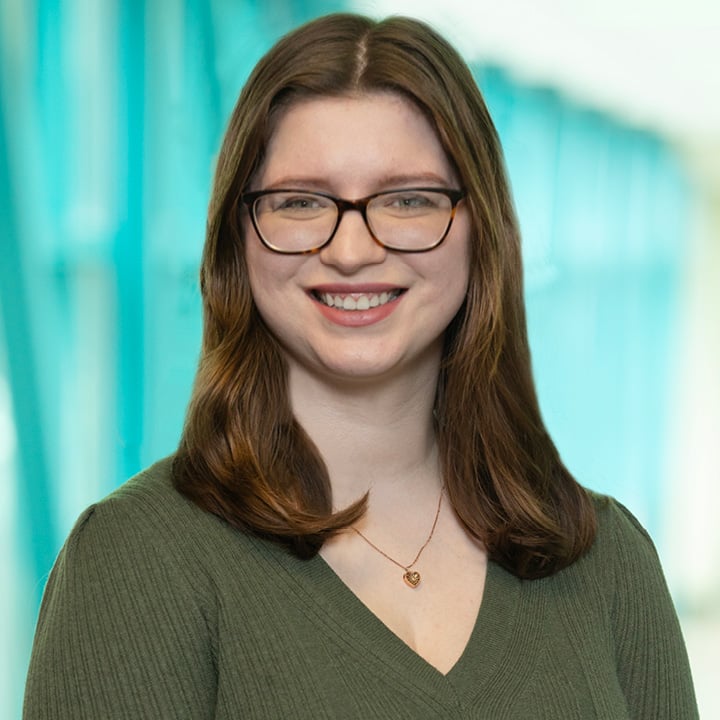
Heather Shipley, Genetic Counselor
From the start, Heather Shipley, their genetic counselor at Beacon, was a calming presence. “As a genetic counselor, I work with families who have spent a lifetime navigating the healthcare system and searching for answers,” Heather explains. “The genetic counseling process was truly collaborative, where the Nikolai family was the expert on their experiences.”
Heather explains the test through an analogy. “If human DNA is like a bookshelf with 46 books, a karyotype makes sure all of the books are present and in the right order,” she said. “A microarray makes sures there are no extra or missing pieces of those books. The test we did, called whole exome sequencing, spell checks the books to see if there are any typos in the text.”
Staff at the Beacon genetic counseling office also took the time to walk Susan and Tony through the financial side, helping them understand what their insurance would cover before any testing began. “Genetic counseling at Beacon supports families throughout the genetic testing process, both logistically and emotionally,” Heather explains.
When it came time to move forward with genetic testing, kits arrived at their home for Genevieve, Susan and one for Tony. Each one required only a simple cheek swab.
After decades of unanswered questions, the wait was just three weeks.
Genevieve finally had a diagnosis.
HIST1H1E syndrome: What the diagnosis means
Twenty-seven years of seeking a diagnosis. And it took just three weeks to finally get one: HIST1H1E syndrome.
Researchers first described HIST1H1E syndrome, also known as Rahman syndrome or H1-4 syndrome, in 2017. As of 2026, doctors have diagnosed only about 60 people, most of them children, with this condition.
Previous testing couldn’t identify HIST1H1E syndrome because, as the above book analogy illustrates, a mutation in a specific gene called HI‑4 causes the syndrome. This change is too small to appear on a karyotype or microarray. But now, Heather was able to provide the Nikolai family with an answer and connect them with resources, community and specialists.
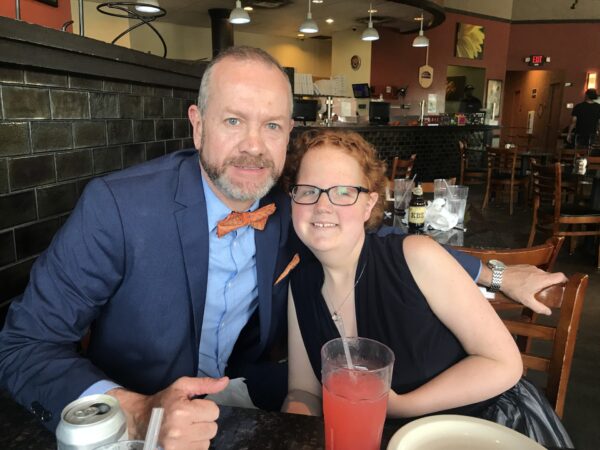
Tony and Genevieve Nikolai in 2025
Heather told Susan that while there is no cure, the HIST1H1E diagnosis guides monitoring for people like Genevieve. Those with HIST1H1E syndrome may have things like learning challenges ranging from mild to more significant; certain facial features; and subtle differences in skin, hair or teeth. Others may have health concerns related to their bones, heart or hormones. Like all genetic conditions, each person is unique. Not everyone will have the same symptoms, and the condition can vary considerably from one person to another.
After getting the diagnosis, Susan immediately called Tony to share the news. “Tony was a little freaked out by my call because all he could hear was me crying, but I was crying with joy and relief,” Susan said.
The diagnosis also supports why Genevieve’s original MRI and recent MRI differ so significantly: Those with HIST1H1E syndrome can have delayed myelination that will grow over time. That gradual process explains why Genevieve continues to learn and gain new skills even in her 20s.
Genevieve has no real idea what’s going on; she’s happy to live her everyday life. But when she saw pictures of other kids with HIST1H1E syndrome, she confidently said, “Those are cute kids! Just like me!”
Why a diagnosis through genetic testing matters
For families like Genevieve’s, genetic testing has led to something just as meaningful: community. Finding other families, sharing experiences, and building a community can offer hope and reassurance. It reminds parents that they are not alone and that it is never too late to seek answers and support. Susan’s advice to other parents: “Don’t give up! And even if it’s not genetic, it’s worth pursuing for a unique diagnosis.”
Looking back, moving forward
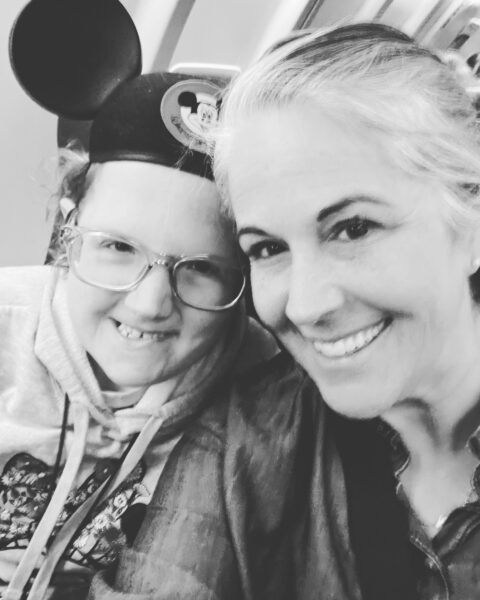
Genevieve and Susan Nikolai in 2025
As Susan reflects on their family’s 27-year journey with Genevieve, she’s certain of one thing, “We’ve had a good life, and she’s had a really good life. She’s brought so much to us.” Susan also sees that life in 2026 is good. “It’s so wonderful how different it is today to live with a disability,” Susan said. “The world is more accessible, and people don’t judge Genevieve and they accept her.”
Genetic testing can be incredibly important in helping families better understand a person with a disability. For parents, it brings long-awaited clarity to things that once felt confusing or unexplained. Just as importantly, a diagnosis can open the door to support, including financial assistance, new medical research and potential treatments.
The diagnosis through genetic testing at Beacon brought closure to the Nikolai’s search for a diagnosis. They now have a reassurance that they’ve done everything right with their child.
Find your answers at Beacon
Genevieve’s story shows that even after decades of uncertainty, answers are possible. Beacon offers genetic testing and genetic counseling services throughout northern Indiana and southwest Michigan, helping individuals and families better understand their health and future. Whether you’re seeking answers for yourself or a loved one, our team is here to listen, explain, and support you every step of the way. Connect with our team today to learn more and take a step toward clarity and confidence.