How cochlear implants gave one mother the gift of deeper connection with her family
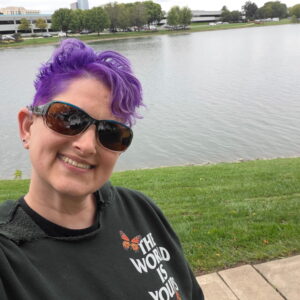
Shayna Roodman
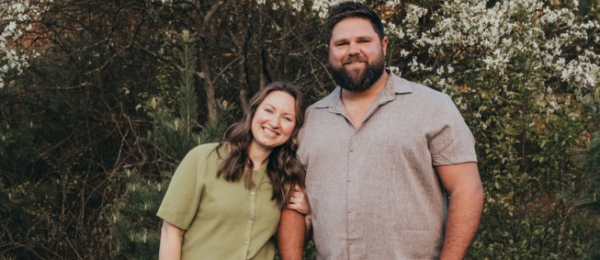
The day Shayna Roodman didn’t hear her baby crying, she knew things had to change.
For most of her life, Shayna had trouble hearing. Still, she got by. It wasn’t until her mid-20s that she realized something was definitely wrong. Then, one afternoon when she went to check on her baby, she found he was having a seizure. He had been crying, but she never heard him.
“That’s when I realized I needed to start dealing with this,” she says.
Shayna promptly sought help, and hearing aids made a real difference. But over time, her hearing continued to decline.
“I went to various audiologists over the years,” she says. “My hearing just continued to get worse and worse. I was finally diagnosed with sensorineural hearing loss about six years ago.”
The most common type of hearing loss, sensorineural hearing loss results from damage to the inner ear or to the nerve that carries hearing signals to the brain. Sonia Yuen, MD, Beacon Medical Group ENT and Audiology Elkhart, explains that there are a number of possible reasons for this nerve damage, including genetics, illnesses, exposure to loud noises and certain medications.
“People can be born with this damage, or it can happen over time,” Dr. Yuen says. “In Shayna’s situation, she developed early nerve damage that would fluctuate but progressively worsen.”
Treatment options
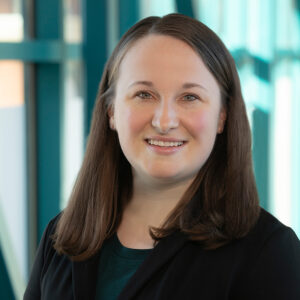
Shanae Sobieray, AuD
Audiology
Shayna upgraded to top-of-the-line hearing aids that incorporated the latest technologies.
“They helped some, but my hearing still wasn’t great. That was around the time I first heard about cochlear implants,” she says.
Cochlear implants are electronic devices that help people with severe hearing loss or deafness. Each device consists of an internal and external portion that sit behind the ear and work together to pick up sounds in the environment, convert them into electrical impulses and send the impulses directly to the patient’s auditory nerve.
Shayna spoke to her audiologist about the implants, but her hearing loss had fluctuated to be just outside the criteria for surgery. When she and her family moved to South Bend a couple years later, Shayna began seeing Shana’e Sobieray, AuD, an audiologist with Beacon Medical Group ENT and Audiology South Bend.
“I just want to express how patient Shana’e is with me and also how kind and informative she always is,” says Shayna. “She explains anything and everything until I fully understand and is always patient and kind.”
Shana’e says that prior to qualifying for a cochlear implant, a patient and audiologist must demonstrate that they have exhausted options to obtain benefit from hearing aids. “With Shayna, this was a long process, as her hearing kept fluctuating. She was constantly in the unknown space of not knowing how she was going to hear that day until she woke up, which you can imagine is very debilitating and anxiety-provoking,” she says.
Finally, Shayna’s hearing reached the point when Shana’e could refer her to Dr. Yuen.
“I loved her from the start!” Shayna says of Dr. Yuen. “I have seen a lot of providers in my day. She’s one the best, most genuine and caring providers I’ve met.”
Shana’e and Dr. Yuen discussed Shayna’s hearing, test scores, lifestyle and quality of life related to her hearing loss. Dr. Yuen enjoys collaborating with both the patient and audiologist regarding cochlear implant surgery.
“Shana’e Sobieray, AuD, is a great audiologist who has been taking care of patients with hearing loss for many years. I know when she thinks a patient is ready for a cochlear implant, she has exhausted all other options.” Dr. Yuen says.
A surgical solution
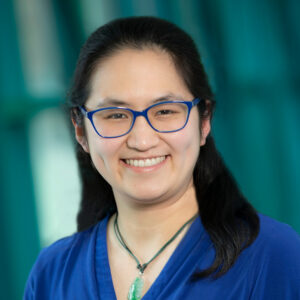
Sonia Yuen, MD
Otolaryngology
“I personally had decided I wanted to get the surgery sooner rather than later,” Shayna explains. “I didn’t want to wait to lose my hearing entirely. Dr. Yuen said that because I was at the threshold [of qualifying] and understood the risks, she would be willing to do the surgery.”
Shayna received a cochlear implant in her right ear in August 2024, and in her left ear six months later. Both procedures went well, although the second surgery took two hours longer than expected due to some complexities in the anatomy of her ear.
“When I was operating on Shayna’s second ear, it became evident that something was going on,” Dr. Yuen says. “I’m grateful that I have partners who will come into the operating room when things get tricky, and vice versa. A fresh pair of eyes or an extra set of hands helps me know that I am giving the best care I can possibly give for a patient. That’s what I would want for a family member, and I hope to give the same to my patients.”
Shayna says, “One thing we really appreciate with Dr. Yuen was that she pulled in another surgeon when she needed a different perspective. You don’t see that with most doctors. It just proves to me even more her capabilities, quality and experience.”
Life with cochlear implants
Now that Shayna has cochlear implants, everyday life feels different. She hears sounds that she hadn’t experienced in years: birds chirping, a faucet running in another room, steps in the hallway, tires on the pavement outside.
But getting used to the technology has taken time.
“Cochlear implants are computers, and every person’s brain wants and needs that computer to be programmed differently,” says Shana’e, explaining that it’s the audiologist’s role to figure out that programming. It generally takes about six months for a patient to reach maximum performance, although patients can detect sounds close to the normal range within just one to three weeks.
“It’s essentially putting together a complex puzzle with many moving pieces that need to all work together harmoniously,” Shana’e says.
For the rest of Shayna’s life, she’ll continue to see Shana’e once or twice a year to check her implant’s programming and make any needed adjustments. Her hearing isn’t perfect, but the improvement is remarkable.
“It’s amazing and overwhelming,” she says. She feels especially fortunate to be able to hear her 19-year-old sing. “It is very emotional for my whole family.”

Shayna Roodman
“My quality of life is much better than it was before the hearing aids and with the hearing aids,” she says. It has even improved her relationships with family and friends. “When you can’t communicate with somebody, it’s hard,” she explains. “It puts a strain on the relationship.”
As someone who tries to be active in the Deaf community, the decision to get cochlear implants wasn’t easy for Shayna. But for her, it was the right decision.
“It’s definitely worth it, and I recommend it to anyone who qualifies. My only regret is that I didn’t get it done sooner,” she says.
Many cochlear implant patients feel the same way.
“When I talk to patients after they have done the hard work with their cochlear implants to hear again, the large majority say they wish they had the surgery done sooner,” says Dr. Yuen. “I’m honored to be part of that journey to better hearing.”