Sleep, homesickness and emotional well-being: What parents should know before camp
For many children, going to camp whether for a day, overnight or extended stay is an exciting milestone. It’s a chance to build independence, make new friends and try new things.
But even with all the excitement, it’s also completely normal for kids to experience emotional and physical adjustment during that transition.

Anne Davidhizar, NP, Three Rivers Health PAWS
“Not every concern we hear about when kids attend summer camp is physical,” said Anne Davidhizar, NP, family medicine nurse practitioner at Three Rivers Health PAWS. “Sometimes the physical symptoms children report are actually related to stress, sleep changes or adjustment to a new environment.”
Sleep disruption — a common early challenge
New surroundings, different routines and excitement can all make it harder for kids to fall or stay asleep. That lack of rest can then show up in other ways: fatigue, irritability or even physical complaints like headaches or stomachaches.
“At camp, sleep routines are often very different from home, and that adjustment period can affect how kids feel during the day,” Anne said. “Adequate nutrition, hydration and downtime also play an important role in emotional well-being. Skipped meals, dehydration or sensory overload during busy camp days can make it harder for kids to regulate emotions and cope with stress.”
Homesickness and emotional adjustment are normal
Homesickness is another very normal part of the camp experience, especially for younger children or those away from home for the first time.
It may show up as sadness, withdrawal, trouble sleeping or frequent requests to call home. While it can feel intense in the moment, it is often temporary and improves as children adjust.
Prepare kids for success and mental well-being
For parents, preparation before camp can make a meaningful difference.
Talking openly about what homesickness might feel like and reassuring kids that it’s normal can help reduce anxiety. Practicing short separations ahead of time and reviewing simple coping skills — like asking for help, taking breaks or naming feelings — can build confidence.
“The first few days are usually the hardest. Once kids settle into routines and start forming connections, we often see those feelings improve,” Anne said.
At camp, staff play an important role in helping children adjust. Encouraging kids to talk with camp staff when something feels off can help reduce anxiety. Staff members support emotional well-being by encouraging participation, helping kids maintain routines and offering reassurance.
Recognizing signs that need attention
While homesickness and mild stress are normal, persistent withdrawal, refusal to participate or physical symptoms like ongoing stomachaches, headaches or fatigue still deserve to be taken seriously and evaluated if needed.
“Most of what we see is part of healthy adjustment,” Anne said. “But if symptoms persist, worsen or significantly affect a child’s ability to function, it’s important to take that seriously.”
For most children, these early challenges improve within a few days as they adjust to their new environment.
“The goal isn’t to eliminate homesickness or stress entirely. It’s to help kids build confidence in managing those feelings as part of growing independence,” Anne said.
With preparation, reassurance and support from both families and camp staff, most children are able to navigate this transition successfully and often return home with increased confidence and pride in what they’ve accomplished.
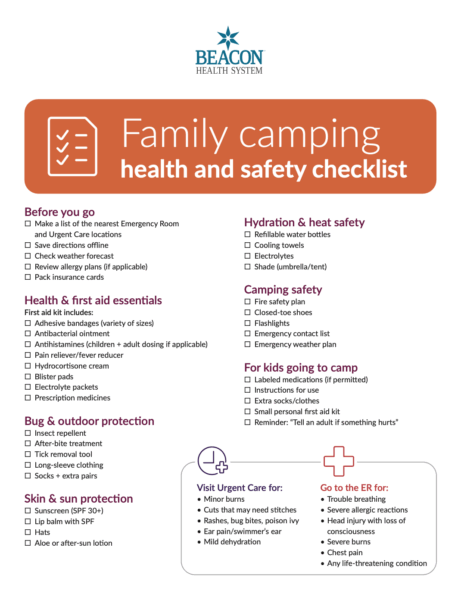 Free download!
Before heading to camp or out on a family trip, most of us pack the basics: clothes, snacks, gear. But one of the most important things to bring is something you hope you won’t need: a well-stocked first-aid kit. Get your free family camping health and safety checklist.