
- This event has passed.
The Brain Science of Trust in Our Communities
Click HERE to Access Teams Link
Click HERE to Access CME Evaluation
The Brain Science of Trust in Our Communities
Presented By: Velshonna Luckey, M.S.
Executive Director, Self-Healing Communities Collective and Adjunct Faculty for Neuroscience and Behavior at the University of Notre Dame
Nancy Michael, Ph.D.
Director of Education, Co-Director Neuroscience and Behavior; College of Science at the University of Notre Dame
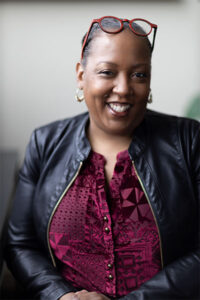 Velshonna Luckey is a native of Detroit, Michigan. She graduated from Central Michigan University with a Bachelor of Science in Business Administration, majoring in Human Resource Management and Business Administration. She earned a Master of Science in Management from Indiana Wesleyan University and holds a certification in Nonprofit Executive Leadership from the University of Notre Dame (ND). She moved to South Bend, Indiana in 2002. Velshonna received the Indiana Torchbearer Award from the Indiana Commission for Women. This award recognizes women who “become true beacons of light in their community and their stories of courage, perseverance, and compassion create a lasting legacy of inspiration”. She is a member of the Leadership South Bend/Mishawaka Class of XXXVIII. Velshonna is also an Executive Journey Fellow, which awards individual renewal scholarships and creates supportive connections between youth workers around the state of Indiana; funded by Lilly Endowment Inc. In 2016, while working for the University of Notre Dame’s Robinson Center, Velshonna and Nancy Michael, Ph.D., Director of the University of Notre Dame’s Neuroscience and Behavior major, received the Rodney F. Ganey, Ph.D. Collaborative Community-Based Research Seed Grant to develop brain health educational materials for K through 8th graders. For more than 25 years, Velshonna has worked with many undergraduate and graduate students, helping them connect their academic work to the betterment of local communities. In 2018, Velshonna started Pendulum Consulting, LLC, which focuses on Executive Coaching of underrepresented professionals. She designed this company to help her more fully live out her personal mission statement, which is to “help people become the very best versions of themselves.” In 2021, she became part of the leadership team for the development of Self-Healing Communities of Michiana, now Self-Healing Communities Collective (SHCC) movement, and now serves as the President and CEO. The SHCC is a community capacity-building movement with a mission of nurturing personal and community well-being through the neuroscience of human resilience and the celebration of our collective strengths. The SHCC goal is to teach everyone in our community to take care of themselves and each other in a way that prioritizes caring for the nervous system. The vision is that everyone in the community will have at least 1-2 trusted and caring adults. In the spring of 2023, Velshonna joined ND’s College of Science as an adjunct assistant teaching professor in the Neuroscience and Behavior major. Her course focuses on science translation for the betterment of community well-being.
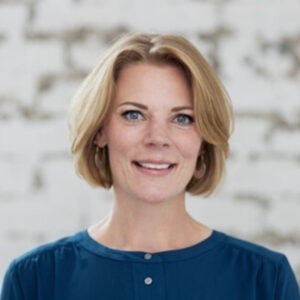 Dr. Nancy Michael earned her doctorate degree in neuroscience from the University of Minnesota in 2012. Her doctoral studies were anchored in the field of behavioral neuroendocrinology where she explored questions of experience dependent plasticity – how experiences with the individuals and the world around us change nervous system structure and function. This curiosity led her to pursue postdoctoral studies in an adolescent development lab, further developing her ability to interrogate the ways in which experiences moderate brain structure, function and behavior. Harnessing this background in experience dependent plasticity, Michael chose to devote her skills to undergraduate educational formation. She joined the Notre Dame faculty in 2014 to develop the newly created undergraduate program in neuroscience and behavior. Over the years, her dedication to excellence, innovation in education and commitment to community wellness have earned her numerous teaching, advising and community awards, and currently serves as the Director of Education and Co-Director for the Neuroscience and Behavior major at the University of Notre Dame. In addition to her work on campus, Michael partners with multiple community organizations to develop and implement NEAR science approaches that aim to mitigate the impact of toxic stress and promote healing and resilience of individuals and communities. NEAR stands for Neuroscience, Epigenetics, Adverse childhood experiences and Resilience, and a NEAR-science approach uses a community-centered, general capacity building model to mobilize the evidence base of the NEAR sciences in support of practical skill development for individuals and community organizations.
Broadly, Dr. Michael’s work collaboratively develops population-specific, NEAR-based strategies to support practical skill building for community healing and resilience efforts. Her work is published across a wide variety of platforms ranging from primary scientific journals, book chapters, to children’s books. Common themes across her writing center around experience dependent plasticity and the critical role relationships play in human learning and well-being. In addition to her written works, Dr. Michael takes a leadership role in designing and executing a wide variety of professional development opportunities to support individuals in the “helping professions” (e.g. educators, youth workers, mental health professionals, community health workers, medical professionals, etc.). Dr. Michael is known for making very complex information accessible and actionable in practical contexts. The breadth of her productivity is indicative of her desire to not only participate in knowledge generation, but to support the translation of the neuroscientific knowledge base into practical skills, behaviors and habits of mind that become present in our daily living.