Genetic counseling uncovers Beacon patient’s hidden heart risk
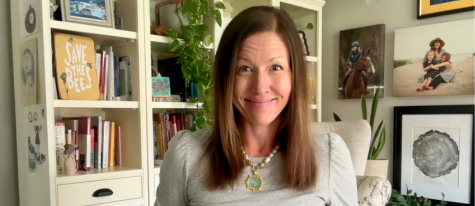
Laura Tuthill, PhD, a proud mother, gardener, adjunct professor and equestrian, looks the very picture of health. But a family health crisis set her on a journey that would change her life — and possibly save it.
When a relative became critically ill with heart disease several years ago, she began to wonder about her own risk.
Laura’s relative had been blindsided by his illness.
“He thought he had just had the flu,” she said. Not only was he young – in his early 40s – like Laura, he was healthy and took care of himself. Yet his illness struck quickly. “Within a couple of months, he required a heart transplant, and there were so many questions about what happened.”
Determined to find answers, Laura decided to delve into her family history. She discovered several relatives who died young from cardiac disease, as well as several who had heart transplants. The pattern was unsettling and impossible to ignore.
She began connecting the dots and asking questions. The next step was genetic counseling at Beacon Medical Group Oncology South Bend, where she met with genetic counselor, Kassi Brooks, LCGC.
Learning her risk
As a genetic counselor, Kassi manages the testing and works with patients to help them understand their genetic health risks and make informed decisions about their health care.
“I am able to take a detailed medical and family history and provide a thorough risk assessment based on all of this information. This aids in guiding appropriate genetic testing recommendations for the patient,” Kassi said. “In Laura’s case, it was clear based on her family history that there was concern for a hereditary cardiac condition. Therefore, we tailored her testing to look at 100 genes associated with hereditary cardiomyopathy and arrhythmia disorders.”
The testing process itself was simple: a mouth swab shipped to a lab. Laura elected to get a heart panel, which would screen her for a variety of genetic mutations associated with cardiac illness. Results arrived a couple of weeks later, and she met with Kassi again.
That’s when Laura learned that she has a mutation in the BAG3 gene. This finding put her at risk for developing dilated cardiomyopathy, a rare condition in which the heart muscle stretches and loses its ability to pump blood, often leading to early-onset heart failure.
“While it’s always difficult giving a positive genetic test result, it’s also a chance to provide information that empowers patients to be proactive with their health and hopefully catch health problems early, before they develop into a significant problem,” Kassi said.
Laura remembers receiving the news,
“It was emotional when I found out,” she shared. “It’s a huge emotional weight, a difficult diagnosis to receive. And when your doctor starts talking about heart transplants and the uncertainty of your future, that’s when the gravity of it hits you.”
Taking action
Kassi explains that an important part of her role as a genetic counselor is helping refer patients who have a positive genetic test result to the appropriate specialists.
“If a person is identified to have a hereditary predisposition, it’s our goal to help make sure that they begin whatever specific health screening they need as early as possible and are being seen by a specialist who is familiar with their predisposition,” Kassi said.
For Laura, it was important that she be referred to a cardiologist familiar not only with dilated cardiomyopathy, but also with monitoring individuals who are at risk but not yet showing signs of developing dilated cardiomyopathy.
That connection proved to be lifesaving.
Laura’s knowledge about her risk has enabled her to be proactive, ensuring her heart is closely monitored by an expert in her condition. Last year, her doctors discovered the early signs of changes in her heart, and she was able to take action long before she experienced any physical warning signs.
“I was extremely lucky that I was able to figure this out before I started to have symptoms. I was able to get connected with a genetic cardiologist, a specialist who really understands how this disease progresses,” she said.
Finding community
To help her cope with the weight of her diagnosis, Laura relies on a community of support. She connected first with the Dilated Cardiomyopathy Foundation, and now she leads a global support group for people who have the BAG3 mutation.
She also volunteers as a WomenHeart Champion through a national leadership and advocacy program at The Mayo Clinic, supporting and advocating for other women living with heart disease.
“It’s been really helpful for me to connect with others, to share stories, to hear about their journeys,” she said.
Above all, Laura’s genetic counseling journey has been empowering. She believes that facing a diagnosis is a choice between living blindly with it or building a plan to proactively manage your health.
“Knowledge is power, right? I can ask better questions and educate myself. I think that’s a huge part of it,” Laura said.
“As a patient, you have to really advocate for yourself, you have to educate yourself, you have to seek out those resources and those specialists, and I would have never been able to do that if it wasn’t for genetic testing.”